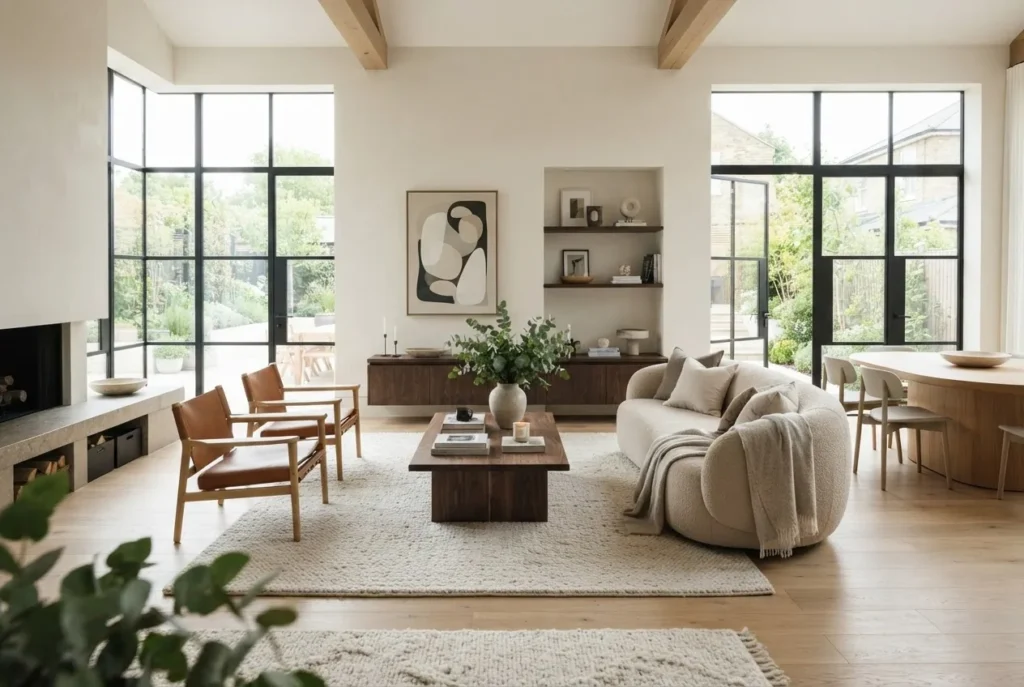
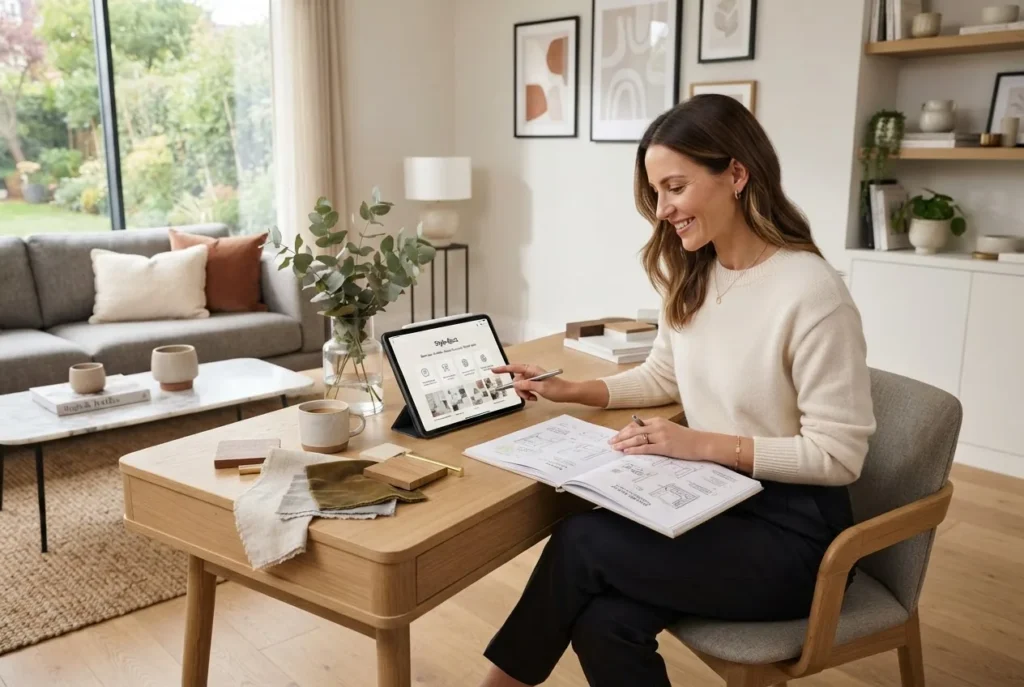
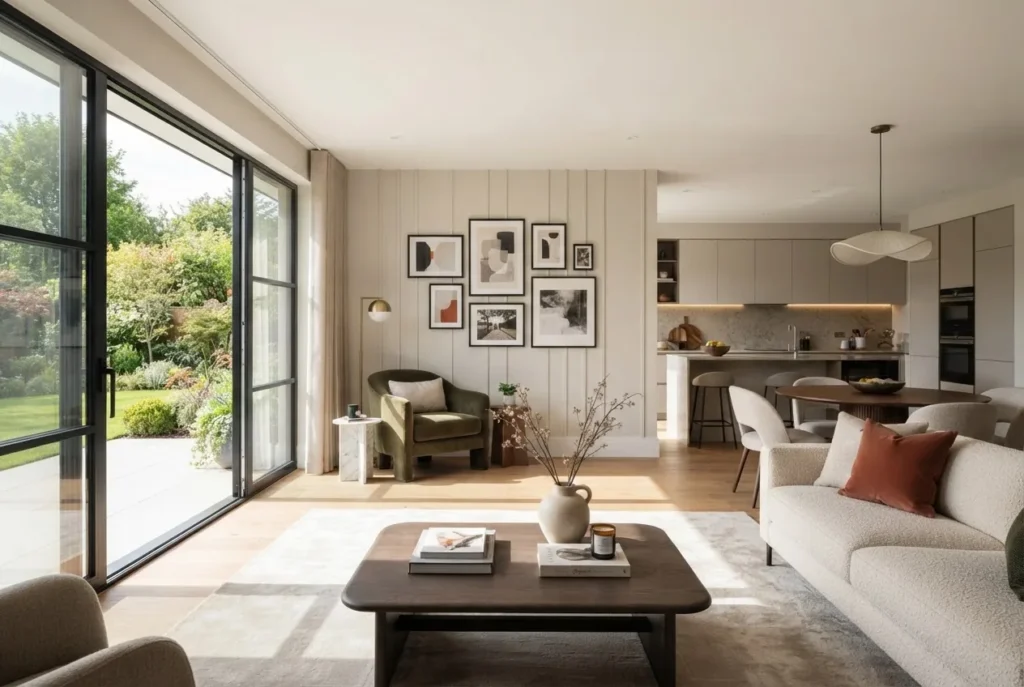
By the end of this guide you’ll have a clear, actionable decorating plan for one room or an entire home: measured layouts, a chosen palette, furniture and lighting decisions, and a budgeted execution plan. Expect to spend 1–3 weekends for a single-room refresh and this guide assumes beginner to intermediate DIY skills.
Before you start
- Tape measure (metric and imperial markings), spirit level, and a laser distance tool (recommended for rooms over 5 m).
- Notebook or digital app for mood boards (Pinterest or a simple board in an interior design app).
- Basic toolkit: screwdriver set, hammer, picture-hanging kit, painter’s tape, drop cloth.
- Smartphone or camera for photos, and a notepad for room-function notes.
- Budget spreadsheet (simple CSV or Google Sheet) with estimated item costs and contingency (plan +15%).
Transitioning from ideas to a finished room requires a practical process; the next section explains styling fundamentals you should understand before you begin.
Understanding How Do I Decorate: The Basics of Home Styling
How do I decorate is the practical question that translates design theory into daily life: matching function with form and creating spaces that feel like home. Start with core decorating fundamentals: clarity of room function, acknowledging natural light, choosing a coherent color strategy, and balancing scale and circulation so people can move comfortably.
Interior decorating principles are rooted in three pillars: function, proportion and rhythm.
- Function — Define primary and secondary uses (e.g., living room: lounging, TV viewing, reading). Note required seating, storage and tech needs.
- Proportion and scale — Select furniture sized to the room. A sofa requires at least 60–90 cm clearance behind for traffic flow; small lounges look lost against a large hearth.
- Rhythm and repetition — Repeat one or two motifs (materials, shapes, or colours) to create visual continuity across connected rooms.
Color schemes and palettes communicate mood before accessories do. Use basic color theory: choose a dominant colour (60%), a secondary (30%) and an accent (10%). This 60/30/10 rule keeps rooms balanced — a widely used rule among stylists.
Lighting is the often-neglected third pillar. Combine ambient, task and accent lighting to create layers and control mood. For example, aim for 150–300 lux for living room ambient light, 300–500 lux for task areas like reading nooks, and directional accent lighting for artwork.
Texture and materials deliver tactile interest and longevity. Mix matte and gloss, soft textiles and structured woods, and consider durability for high-use areas — e.g., a 100% polyester woven cushion cover for homes with pets versus a linen for low-traffic rooms.
Developing a decorating mindset helps: treat decorating like curating a wardrobe — start with staples, add seasonal accessories, and avoid impulse buys that don’t fit your palette or scale.
Practical example: a one-bedroom living room makeover I completed used a neutral 60% soft grey on walls, 30% warm timber tones in furniture, and 10% terracotta accents; measured circulation kept 80 cm between coffee table and sofa, improving flow immediately.
According to a 2024 industry report from a national interiors survey, 58% of homeowners prioritise improved lighting when refreshing a room — a clear signal to invest in layered lighting early.
Tools and quick method: to create a simple mood board, photograph the room in daylight, take 3–5 close-up shots of materials, and assemble a digital board (Pinterest or an interior-design app). Label each item with measurements and cost estimate. This tool walkthrough reduces guesswork during purchasing.
Now that you have the basics, follow the hands-on steps below to move from assessment to installation.
Step-by-Step Guide: How Can I Decorate My Home Effectively?
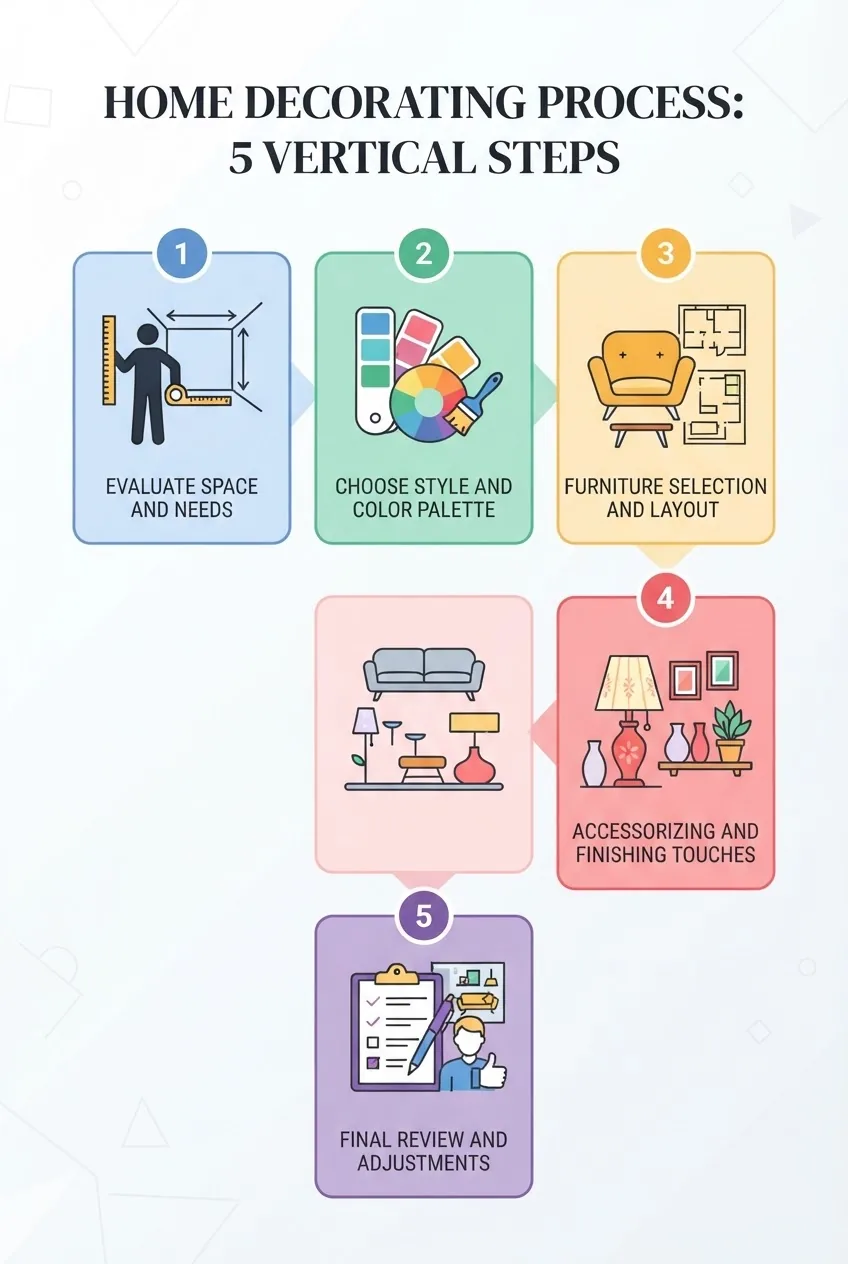
Below is a five-step decorating roadmap you can follow room-by-room. Each step opens with an action-first phrase and includes concrete measurements, timeframes and decision checks.
-
1. Measure and evaluate your space and needs
Start by recording measurements: room length, width, ceiling height, door swings and window positions. Measure in millimetres or centimetres to avoid rounding errors for fitted items. Note natural light hours by observing the room across a day (take three photos: morning, noon, late afternoon).
Record function clearly: list primary activities (e.g., “watching TV — requires 3 seats facing screen; reading corner with 750 mm lamp reach; compact desk 1100 x 600 mm for occasional work”). Create a simple bubble diagram showing activity zones.
Recommended timings: 1–2 hours for measurements and photos; 1 hour for drafting a rough floor plan using a floorplan app or a sketch (use a scale of 1:50 for clarity).
Practical tool walkthrough: use a laser distance measurer to get wall lengths (accuracy ±2 mm). Enter values into a floor plan app and drag furniture icons sized to your actual measurements; this avoids scale mistakes at purchase.
-
2. Choose a cohesive style and color palette
Decide on a style theme (e.g., Scandinavian, contemporary, coastal, transitional) but remain style-agnostic: identify characteristics you like (clean lines, warm woods, tactile textiles). Limit the palette to three core tones: dominant, secondary, accent (apply the 60/30/10 rule).
Color theory application: use a neutral base (warm grey or off-white) for 60% of surfaces; choose a secondary tone from an analogous palette; pick an accent from a complementary colour to the dominant hue for visual pop. For example: warm grey dominant, soft blue secondary, brass or mustard accent.
Examples:
- Calm, minimalist: dominant—soft white (60%), secondary—light oak (30%), accent—deep navy (10%).
- Warm eclectic: dominant—warm beige (60%), secondary—terracotta (30%), accent—forest green (10%).
When selecting finishes, sample material patches in the room under natural and artificial light; small differences in hue are common between showroom lighting and your space. Order paint samples and test 50 x 50 mm swatches on different walls and evaluate at three times of day.
For modern inspiration and curriculum-style guidance, see this modern styles guide and interiors course.
For contemporary style specifics, explore profiles on contemporary materials and finishes in the contemporary decor styles and design guide.
-
3. Select furniture and plan the layout
Choose furniture that matches both scale and traffic flow: leave 60–90 cm between a coffee table and sofa, and 80–120 cm for primary circulation paths in living areas. Confirm door clearances (minimum 80 cm for entry doors, 75 cm for internal door swing).
Use these ergonomic and placement checks:
- Focal point first: orient seating toward the fireplace, TV or view.
- Scale check: measure large pieces and tape out their footprints on the floor before purchase.
- Proportion: a 3-seat sofa in a 3.6 m room sits comfortably with a 120 x 60 cm coffee table.
- Flow optimisation: ensure at least 800 mm between furniture edges on a primary path.
Time estimate: 2–4 hours for options research and two days for delivery lead times on made-to-order items. If buying second-hand, verify dimensions and check structural joins; insist on supporting photos from sellers and measure in person whenever possible.
Helpful comparison table (DIY vs. ready-made buying decisions):
Decision DIY / Upcycle Buy New / Commission Cost Lower (materials only) Higher (warranty & finish) Time Longer (skill dependent) Faster (ready stock) Customization High Variable -
4. Accessorise and add finishing touches
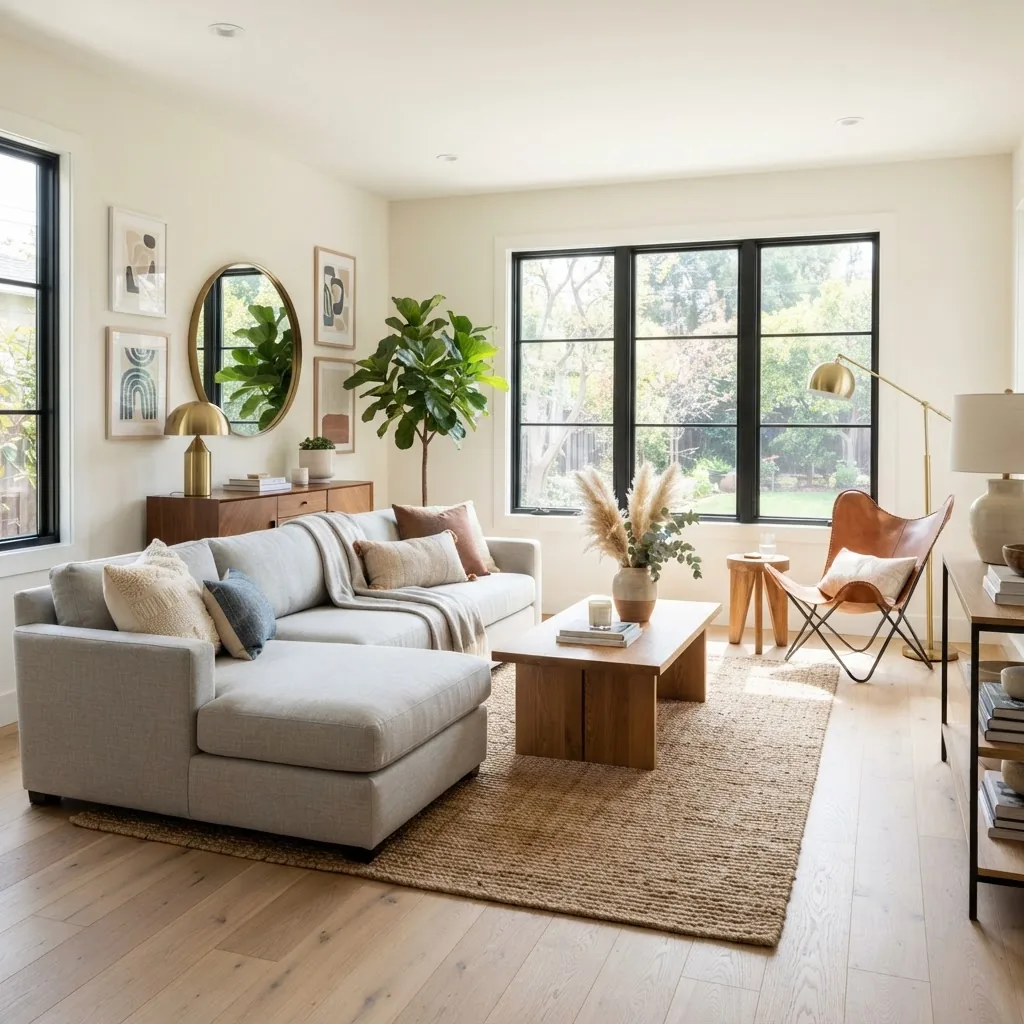
Layer textiles (rugs, throws, cushions) to add texture and define zones. Place art at eye level — centre of artwork should be about 150 cm from the floor in most homes. Use three lighting layers: ambient (overhead), task (reading lamps, under-cabinet), and accent (picture lights or spotlights).
Accessorising tips:
- Group items in odd numbers (3 or 5) on surfaces to feel natural.
- Vary heights: use books, trays and candlesticks to create tiers.
- Keep surfaces at 60–70% occupied (not cluttered) so functionality remains.
decoration photos and image collections
room decoration ideas and decor suggestions
-
5. Final review and adjustments
Conduct a final checklist walkthrough: measure sightlines from 1.2–1.5 m seated height for TV and artwork; test lighting levels at night (use dimmers where possible); live with the layout for 3–7 days and note annoyances. Allow a 10–15% contingency in budget for unexpected items like curtain fittings or extra hardware.
Timing: allow 1–2 weeks for settling and sourcing missing accents; major reconfigurations may need a month if furniture delivery lead times are long.
Common mistakes and how to avoid them (practitioner notes)
I once installed an oversized rug that swallowed a small living room; the room felt chopped and smaller. Avoid this by taping the intended rug size on the floor first. I’ve also seen poor lighting choices: bright cool LEDs above a warm-toned room make colours look washed; always test samples and control colour temperature (2700K–3000K warm for living areas).
Quick checklist — verify your room
- Measurements recorded and furniture footprints taped out.
- Palette defined with paint swatches tested in-situ at three times of day.
- Lighting layered: ambient + task + accent installed or planned.
- Traffic routes allow at least 80 cm clearance on primary paths.
- Budget spreadsheet includes 15% contingency and delivery timelines.
When to call a pro (short guide)
Call a professional when structural changes, electrical rewiring, or compliance issues are required, or when you need a cohesive plan across multiple rooms on a strict timeline. If you value curated sourcing and time-savings, an interior stylist will fast-track selections and procurement.
Next, develop a personal decorating voice so choices feel authentic rather than trendy; read on for structured methods to find your style.
Developing Your Personal Decorating Style
Developing your style is about collecting preferences into coherent, repeatable decisions. Start with these steps: audit your existing possessions, identify three repeat motifs (colour, pattern, material), and test small updates to see what resonates. Style is an iterative process — treat early choices as experiments.
Practical method: create a style brief on one page. Include room function, preferred colours, textures you enjoy, and a clear “no” list (items or styles you want to avoid). This document prevents drift when shopping and when family members offer conflicting opinions.
Sources for inspiration: curated websites, magazines and real homes. For a structured study of modern styles and formal training options, consult this modern styles guide and interiors course. For quick daily inspiration, refer to the best interior design websites for inspiration.
Case reference: a homeowner used an online quiz to discover a “warm contemporary” leaning, then adopted warm woods and matte black accents; after sourcing three key pieces and swapping textiles the home felt cohesive within two weekends.
When adapting trends, proceed cautiously: limit trend colours or shapes to accessories. That way you can swap them seasonally without a major refit.
Tip on uniqueness: blend two styles (e.g., Scandinavian + mid-century) around a single unifying element like a timber tone or metal finish; repetition creates perceived coherence.
Practical Tips to Decorate on Any Budget
Budget decorating is about prioritising impact items and using layering to extend value. Allocate funds by impact: paint (15%), lighting (15–20%), major furniture (40%), textiles and accessories (15–20%), with 10–15% contingency.
Cost-saving strategies and specific tips:
- Paint first: a good paint transformation typically costs under $250 per room in materials and changes mood immediately.
- Upcycle and reupholster: re-cover a beloved sofa’s cushions for 20–40% of the cost of a new piece.
- Shop second-hand for statement pieces: allow 2–4 weeks for sourcing unique items online or at markets.
- Use removable wallpaper or decals for renters — sample panels cost around $25–$60 and allow testing without commitment.
- DIY with clear scope: repainting, hanging shelving and sewing cushion covers are achievable with basic tools and 1–2 weekend days.
For targeted bedroom budget ideas and step-by-step DIY projects, see DIY home decoration tips and bedroom ideas.
Example budget: to refresh a 12 m² living room on a $1,500 budget — allocate $350 to paint, $400 to a second-hand sofa or slipcover, $200 to lighting (one floor lamp + bulbs), and $300 to textiles and a rug; reserve $250 contingency.
Sustainable, low-cost choices: choose durable, easy-clean textiles, buy locally to reduce shipping costs and emissions, and prioritise repairs over replacement for older furniture.
Common Decorating Mistakes to Avoid
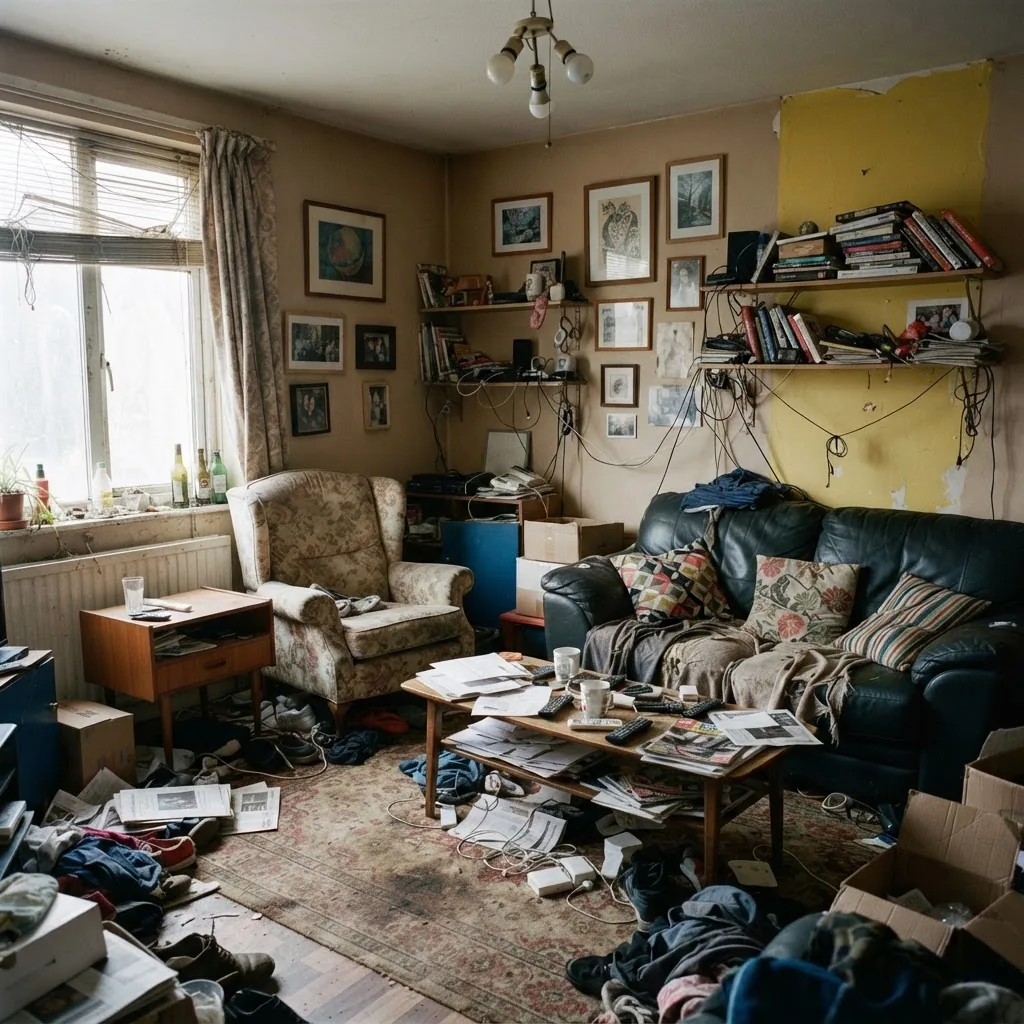
- Overcrowding a room with furniture. Leave minimum 60–90 cm between major seating and 80 cm for primary circulation; I have moved items back by as little as 10–15 cm and instantly restored flow.
- Poor lighting choices. Relying solely on overhead lighting flattens materials. Add a reading lamp (300–500 lux at surface) and accent lights to highlight art or a shelf.
- Ignoring scale and proportion. Buying furniture that’s too big or too small is common. Always test with floor tape and measure door widths for delivery clearance.
- Mismatched styles without a unifying element. Mixing many styles without a repeated motif (colour, metal finish or timber tone) creates visual discord.
- Cluttered surfaces. I’ve seen kitchens with 80% of counter space filled — aim to keep daily-use surfaces under 30–40% covered to preserve functionality.
- Using paint samples only in small strips. Paint a 1 m² block and assess at three times of day; tiny swatches can mislead you.
- Not factoring maintenance and durability. Choose fabrics suitable for life habits: stain-resistant options for families with young children or pets.
- Skipping a final review period. Live with your layout for 3–7 days before buying extra pieces; I’ve saved clients money by reallocating existing pieces rather than buying new.
- Installing without measuring sightlines. Art and TVs placed too high reduce comfort; set the centre of art ~150 cm above floor and TV centre within 1.1–1.2 m from floor for seated viewing.
How to Refresh Your Home Decor Seasonally and Sustainably
Seasonal refreshes should be low-cost and reversible: swap cushion covers, add a seasonal rug, or change artwork. Maintain a small box of seasonal accessories (30–40% rotation) and rotate items every 3–6 months.
Sustainable decorating actions:
- Choose durable materials and those with low-VOC finishes (paints and sealants) to improve indoor air quality.
- Upcycle existing furniture: sanding and re-staining a table takes 2–3 hours plus drying time and often costs under $100 in materials.
- Buy locally to reduce shipping emissions and support circular economy initiatives (furniture repair and resale).
For authoritative guidance on sustainable building and safety, consult national resources such as the Australian Government environment pages and green building councils when applying durable materials or making structural changes: Australian Building Codes Board and Green Building Council of Australia.
Consider longevity: select pieces you can live with for 5–10 years rather than items you’ll tire of in months. Many homeowners report better long-term value from investing in one quality sofa rather than multiple trendy pieces.
When to Consult an Interior Stylist or Decorating Consultant
If you need project management across multiple rooms, procurement support, or help reconciling multiple family preferences, a consultant can save time and avoid expensive mistakes. Stylists provide curated sourcing, quick mockups, and a procurement plan that often reduces overall project time by weeks.
Interior Stylist Services and Home Decorating Consultant Guide
architects and interior designers training and services
Consult when:
- You plan structural alterations (consult an architect or interior architect early).
- You have a tight deadline and need coordinated procurement.
- Multiple rooms must work as a cohesive system and you want a single point of creative control.
Testimonial: “A short, two-hour styling consult gave a homeowner measurable confidence to proceed; we reduced their shopping list by 40% and aligned finishes across three rooms,” says a senior interior stylist with 12 years’ practice.
Final takeaway: start with measurement and function, pick a clear palette, layer lighting and textures, and allow yourself a short living period before splurging on final accessories. When projects exceed the scope of DIY, professional advice often returns project clarity and time savings.