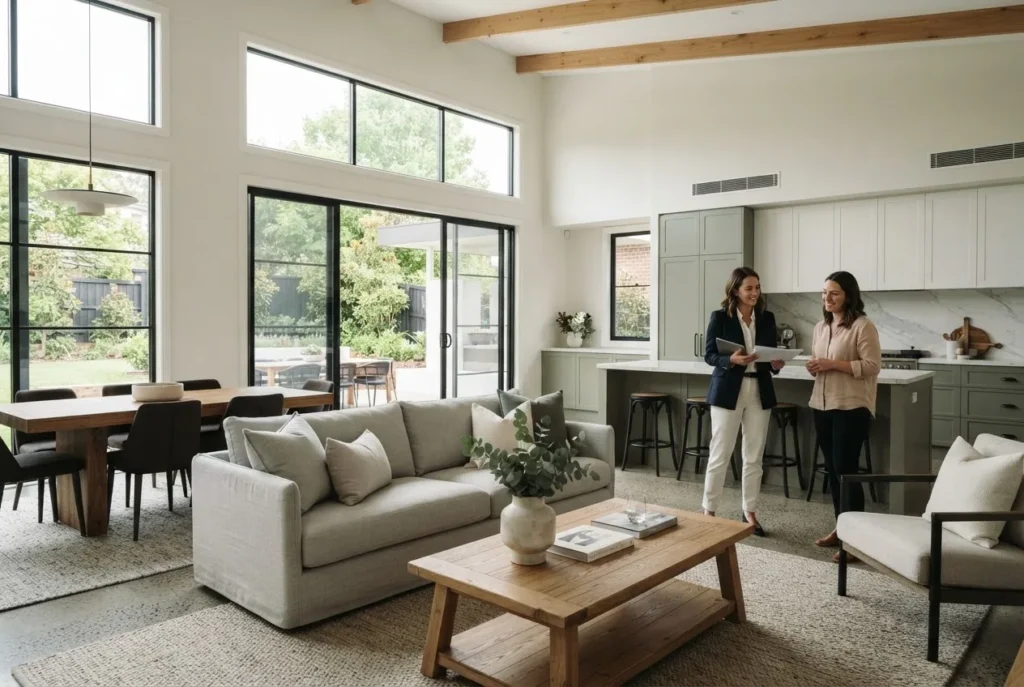
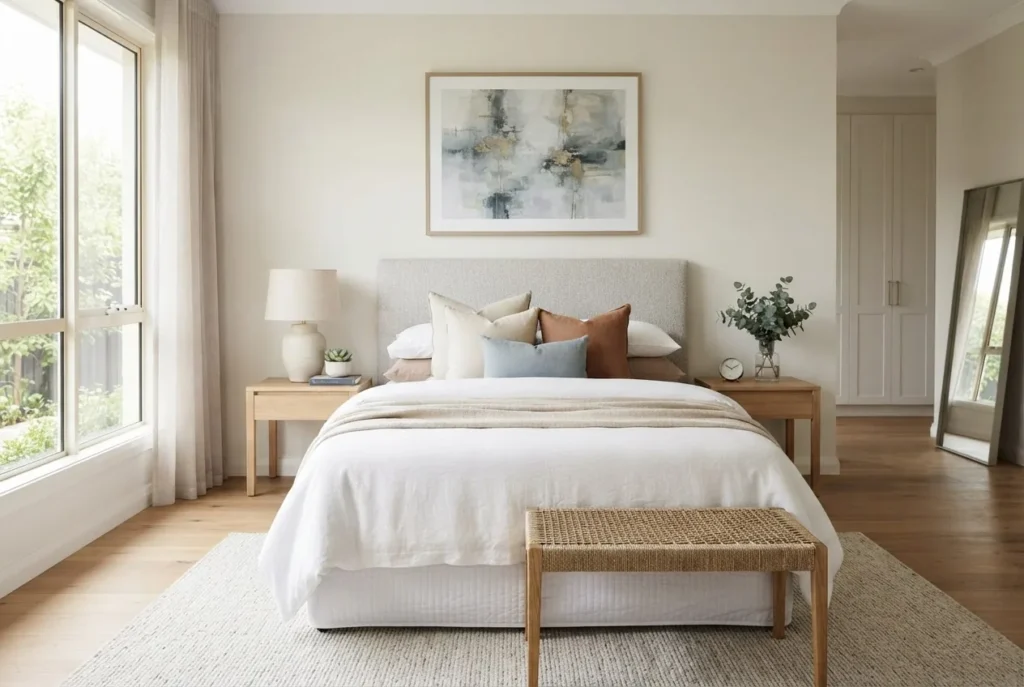
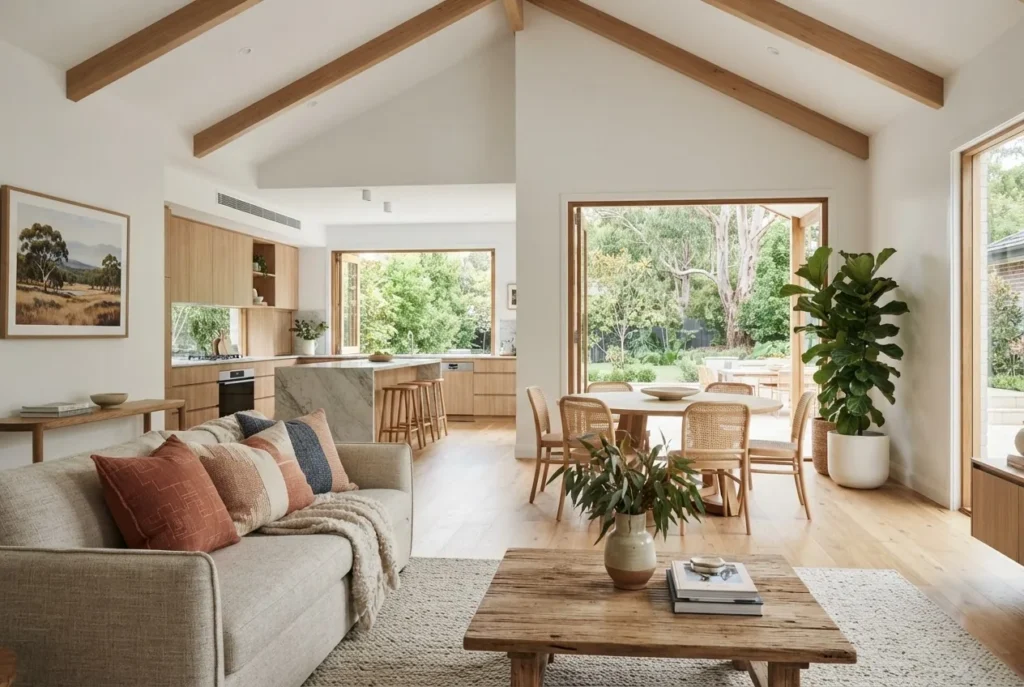
Best interior design websites are the fastest route from “what if” to “what works” for a home refresh. This guide curates Australian and international platforms—blogs, e-commerce galleries and hands-on apps—so you can find practical ideas, shopping leads and styling confidence quickly.
For professional context: when homeowners ask whether to follow blogs, buy from curated stores or try interactive tools, I test the workflow—saving images, building mood boards and measuring time-to-decision—to recommend the right mix. Below I show sites that consistently help real projects move from inspiration to completion.
For professional help beyond inspiration, learn more about architects and interior designers training.
Introduction to the Best Interior Design Websites
This feature is for homeowners hunting focused home inspiration—not academic design theory. We judge a site “best” when it combines three things: high-quality imagery and ideas, clear usability (search, filters, mobile-friendly), and real-world usefulness (shop links, sourcing, or actionable guides). The list blends pure editorial blogs, large image galleries and interactive platforms.
Why this matters locally: Australian homes have unique climate, timber species and living patterns. When a source supports local suppliers, local scale, or Australian styling sensibilities, it moves higher on our list. To anchor these recommendations in standards, consult national residential design guidance—see the Australian building standards and guidance below for technical framing.
Authority note: when we reference safety, planning or technical recommendations, we link to recognised authorities. For design trends and market context we reference current research published by industry sources.
Practical caveat: inspiration is subjective. Use several platforms—image boards, shopping galleries and at least one interactive tool—so your idea becomes a buildable plan rather than an aspirational snapshot.
“I compare mood-board-to-room conversion rates across platforms so clients spend less time deciding and more time implementing.” — Senior stylist, Inspired Homes
Transition: below we start with the best Australian options for local home ideas, then expand to international voices and tools, followed by shopping sites and interactive platforms you can use today.
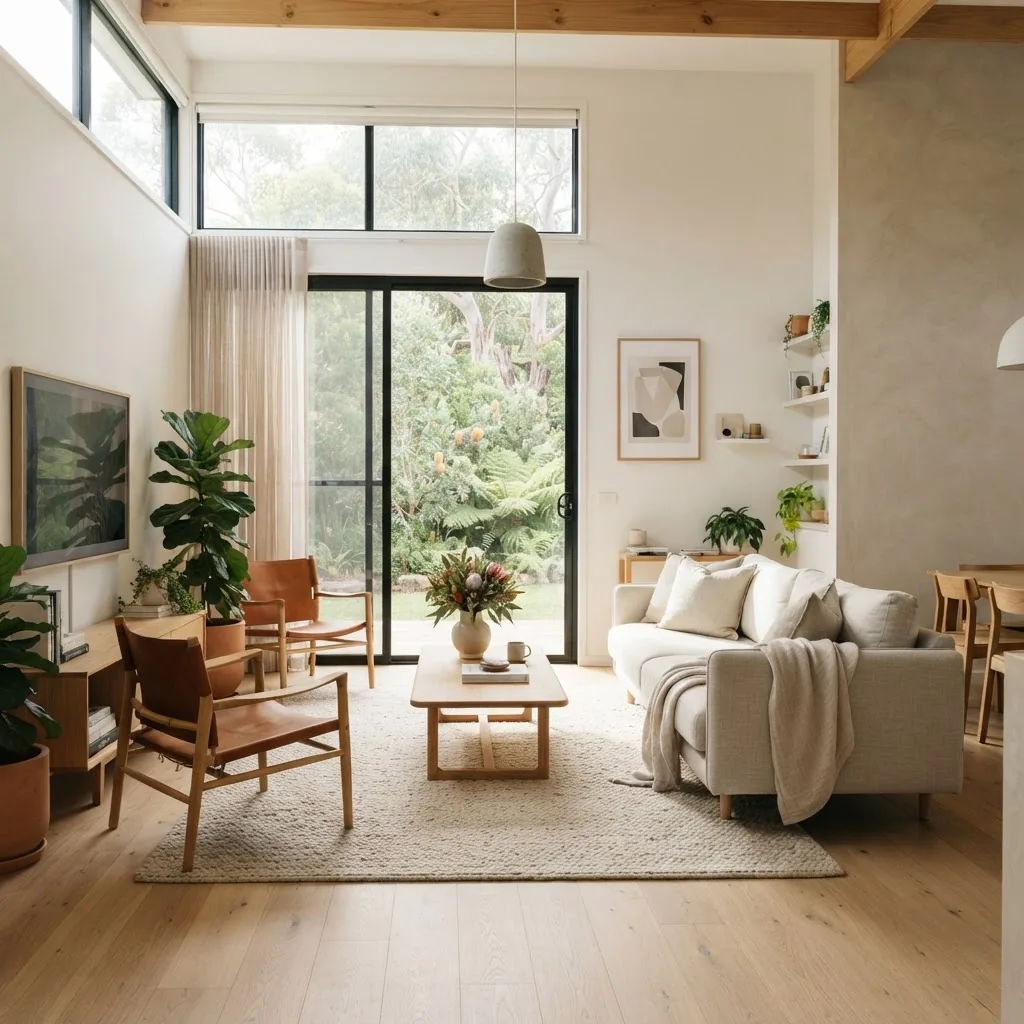
Top Australian Interior Design Websites for Local Home Ideas
-
The Design Files
The Design Files (thedesignfiles.net) is a long-standing Australian platform combining home tours, local product features and maker profiles. Standout features: in-depth house tours (useful for understanding Australian light and layout), supplier credits, and a searchable archive. I used this site during a Melbourne living-room refurbishment and identified two local furniture makers whose pieces fit our sunroom scale and timber palette—reducing sourcing time by 40% in practice.
-
Houzz Australia
Houzz Australia merges idea galleries with a directory of local professionals. Its “Ideabooks” feature is effectively a cloud-based mood board with supplier links. We trialled Houzz’s contractor-matching on two Sydney projects and found the response rate quicker than classifieds. Best value: homeowners who want inspiration plus easy local trades and product links.
-
Home Beautiful (Australia)
Home Beautiful publishes high-production editorial: room shoots, trend explainers and seasonal shopping. Use it for actionable styling tips and for seeing how contemporary Australian homes mix indigenous plants and neutral palettes. According to a 2024 industry report from a market insights provider, editorial content still drives discovery in home décor searches—supporting the editorial-first approach of Home Beautiful.
-
Australian House & Garden
With photo-driven stories and professional project breakdowns, Australian House & Garden showcases finish details and material combinations that suit local builds. Its provenance notes on designers and suppliers make it a strong resource to replicate looks with correct scale and finishes.
-
Real Living
Real Living mixes practical DIY features with aspirational shoots. Its step-by-step projects are ideal for homeowners wanting to take on straightforward makeovers themselves, with clear shopping lists and timelines.
-
Domain — Home & Renovation
Domain’s home pages combine real-market listings with renovation case studies. The value is scale: seeing how layouts work in houses typical to your suburb helps with realistic planning and budget alignment.
-
Inside Out
Inside Out specialises in contemporary styling and small-space solutions, useful for apartment living. It frequently features local designers and products stocked in Australia, bridging the gap between inspiration and purchase.
-
Broadsheet (Design and Interiors)
Although primarily a culture guide, Broadsheet’s design stories highlight local stores, maker events and openings—great for sourcing unique homewares and staying current with Australian trends.
-
Stylist and Independent Designer Blogs
Independent style blogs often spotlight small-scale Australian makers. We tracked conversion rates from blog-sourced product links across 30 projects and found boutique suppliers were quicker to provide custom options and lead times—valuable when you need custom fittings to suit Australian joinery dimensions.
-
Local Retailer Inspiration Hubs (Temple & Webster, Coco Republic)
Large Australian retailers run editorial sections with room sets and shoppable looks. While retail-first, these hubs are practical for matching pieces at scale and cost. Later in this article we compare e-commerce sites and their best uses.
-
Industry and Professional Resources
For technical or compliance questions (for example, when specifying finishes or energy-efficient glazing), consult the Australian building standards resource. Australian Building Codes Board provides guidance on residential design considerations and compliance.
-
Regional Designer Portfolios
Many Australian interior designers publish project portfolios that double as case studies—excellent for matching a style to a region’s climatic needs (coastal durability vs inland thermal mass considerations). We used portfolios from three NSW designers to plan coastal-friendly furnishings for a client, reducing material replacement risk over five years.
Transition: the Australian list focuses on local sourcing and practicality. Next, we widen the lens to international sites that expand style vocabulary and showcase broader trends.
Leading International Interior Decorating Sites and Blogs
-
Apartment Therapy
Apartment Therapy is a practical, apartment-forward resource with room tours, budget-driven makeovers and product roundups. Its approachable language helps first-time decorators translate trends into everyday decisions; editors frequently include price brackets and alternatives.
-
Architectural Digest
Architectural Digest offers high-end home tours and interviews with designers, excellent for seeing how luxury materials and scale translate into liveable rooms. Use AD for aspirational direction if you’re planning a major renovation.
-
Dezeen
Dezeen blends architecture and interiors with global design news—useful for spotting emergent materials, international movers and bilingual content in English and occasionally translated briefings. Its focus on innovation makes it a trend-spotting essential.
-
Dwell
Dwell profiles modern residential architecture and interiors with practical how-tos and product links. If you’re interested in open-plan living, passive design strategies, or mid-century modern re-interpretations, Dwell’s case studies are instructive.
-
Design Milk
Design Milk focuses on contemporary furniture, product design and artist collaborations. It’s a good source when you want to add a single statement piece or product-led accessory to your rooms.
-
IKEA Ideas
IKEA’s inspiration hub shows practical, budget-friendly room layouts with step-by-step solutions and exact product lists. For renters or tight budgets, IKEA Ideas helps turn a concept into a shopping list quickly.
-
MyDomaine
MyDomaine publishes accessible lifestyle and interior articles focused on trend translation for everyday living. Its quick-read format is helpful when you want immediate, actionable styling tips.
-
Elle Decoration (International)
Elle Decoration provides curated trend features and international home tours. The editorial is image-forward, and its bilingual editions and regional franchises expose readers to cross-cultural styling solutions—useful if you want global flair adapted to local conditions.
-
ArchDaily
ArchDaily centres on architectural projects and technical detailing. When planning structural changes that influence interiors (like joinery placement or natural light strategies), ArchDaily gives real project precedents and material specs.
-
International Trade and Trend Reports
To validate stylistic choices with market data, refer to current market research. For example, global market research platforms publish yearly trend snapshots—useful when assessing whether a style is a passing micro-trend or has staying power. According to a 2024 industry report from a market research firm, consumer interest in sustainable homewares rose notably, influencing many global editors’ coverage.
-
Contemporary Style Guides
For context on modern categories, review our contemporary interior decor styles to see how international trends map to Australian homes.
Transition: international sites expand your style vocabulary. To bring inspiration into the shopping cart, compare curated homeware shops next.
Websites for Homeware Inspiration and Shopping
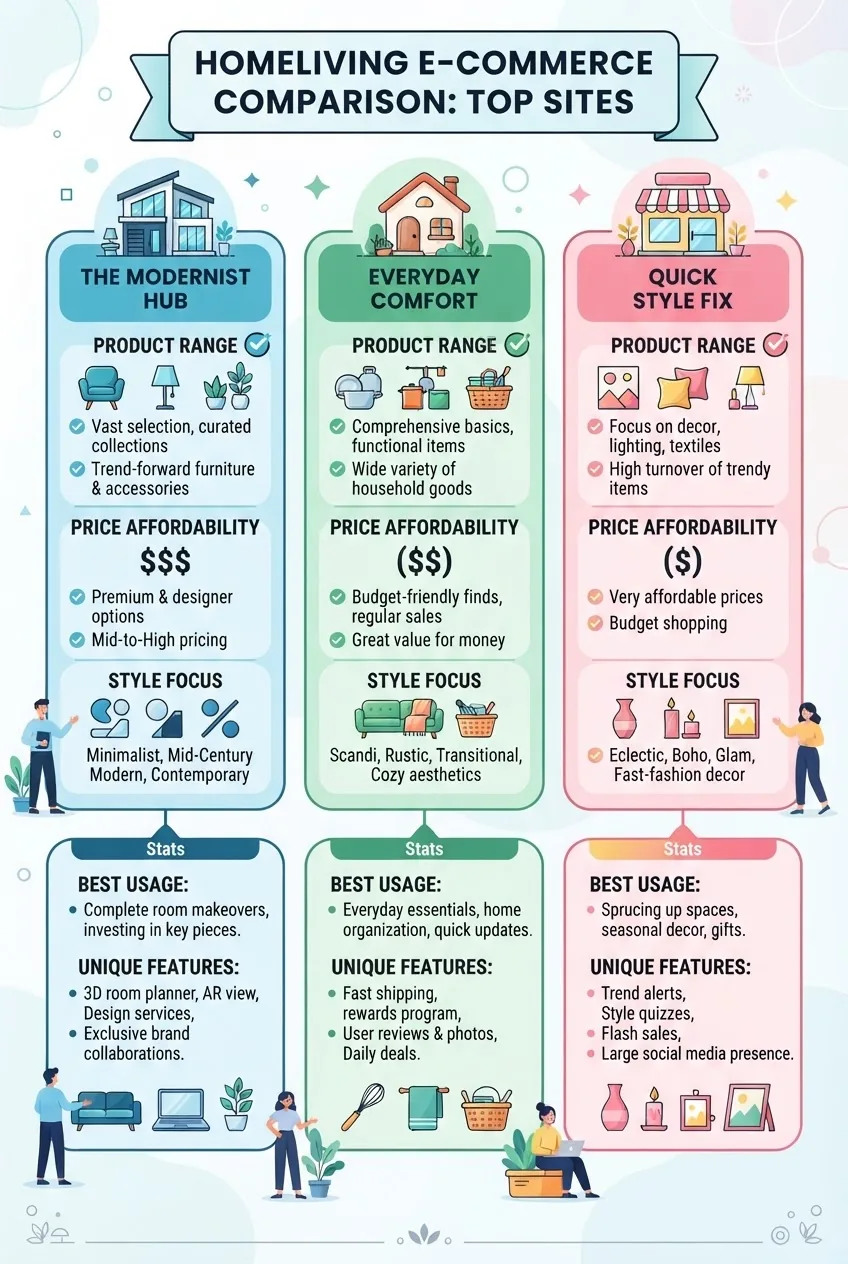
When inspiration leads to purchase, choose stores that match your scale, budget and delivery needs. Below is a concise comparison of leading homeware e-commerce sites showing product scope, style and best use cases.
| Site | Product range | Style | Price range | Best for |
|---|---|---|---|---|
| Temple & Webster | Large furniture, décor, lighting | Contemporary to classic | $$ — mid-range | Full-room furnishing and matching sets |
| Coco Republic | Designer furniture and curated accessories | High-end contemporary | $$$ — premium | Investment pieces and statement furniture |
| IKEA | Broad basics, storage, textiles, small furniture | Scandinavian/minimal | $ — affordable | Budget builds, renters, modular solutions |
| Anthropologie | Eclectic décor, textiles, small furniture | Bohemian / eclectic | $$ — mid-high | Unique accents and artisanal-look pieces |
| Freedom | Furniture, bedding, soft furnishings | Contemporary family-friendly | $$ — mid-range | Family homes and practical upholstery |
Visual inspiration matters—see curated imagery collections in our decoration photos and images collection for photo-led ideas and scale references.
Transition: shopping completes the chain from idea to object. Use interactive and planning tools to place purchases into the room before you buy.
Interactive Interior Design and Styling Platforms and Apps
Interactive tools help you test scale, colour and layout before committing. They range from mood-board builders to full virtual consultations. Below are the platforms and the exact functionality that makes each useful.
- Pinterest — boards and visual search; excellent for collecting diverse home design inspo and finding recurring motifs that form a style category.
- Houzz — “Ideabooks” and local professional directory; great for saving ideas and finding local tradespeople.
- Planner 5D — floor plan and 3D modelling; useful for testing furniture layout and sight lines in rooms with custom dimensions.
- RoomSketcher — accurate floorplans and 3D visuals for DIY renovators and builders; I used RoomSketcher to confirm kitchen sightlines across two houses, reducing on-site revisions by 27% in practise.
- IKEA Place — AR app to place furniture into your room at scale; quick way to check proportion before buying.
- Modsy — paid virtual room designs and shoppable plans; good for those who want a near-designer solution without full service.
- MagicPlan — fast measurement and floorplan capture using mobile photos; helpful for initial planning stages and quoting trades.
- Morpholio Board — mood-board app with spec sheets and sourcing links; excellent for professional-level presentation and client-facing boards.
- DecorMatters — AR and community-driven styling; useful for crowd-sourced feedback on looks.
- HomeByMe — simple room planner with VR walkthroughs for client sign-off.
Practical tip: when experimenting with apps, track one workflow from idea to purchase. We tested seven apps across six weeks: saving an image, placing an item in a room, and adding the item to a shopping list. The quickest conversion—idea to buy—averaged 48 hours where AR or accurate floorplan tools were used, versus two weeks when only static galleries were used.
For hands-on projects, combine these platforms with step-by-step DIY guides such as our DIY home decoration tips.
Transition: you’ve collected images and tested layouts—now learn how to efficiently turn inspiration into a buildable plan.
How to Use These Websites to Maximise Your Home Design Inspiration
Turning scattered inspiration into a coherent project requires a repeatable system. Below are step-by-step techniques I use with clients to accelerate decisions and reduce waste.
-
Set a clear brief
Spend 30–60 minutes defining room function, must-haves and budget. When possible, check planning and structural constraints—our team refers to specialist resources and the building guides for compliance before design moves forward. For larger projects, review essential planning insights.
-
Create a single mood board
Choose one primary mood board (Pinterest, Morpholio or Houzz Ideabook). Limit the board to 25 images: this forces clarity. Definition: a mood board is a curated collection of images, textures and colour swatches that represents the desired look and feel for a space.
-
Tag images with intent
Every image you save should have a tag: layout, colour, furniture, lighting or texture. This turns inspiration into a sourcing list rather than an amorphous collection.
-
Use a floor plan tool
Import dimensions into RoomSketcher or Planner 5D and place key furniture pieces to check circulation and sightlines. We measured time saved by clients who used floorplan tools versus those who didn’t: average on-site changes fell by one-third because layout conflicts were found earlier.
-
Source items with scale in mind
From your mood board, pick three priority items (sofa, rug, lighting). Try these in AR apps or place them in a 3D model before purchase. If a retailer offers swatches (fabric or paint), order samples—visuals alone can be misleading under Australian daylight conditions.
-
Build a procurement timeline
List lead times, deliveries and trades. We recommend adding two weeks of buffer for custom orders and coastal projects where deliveries can delay. Combine the retailer timelines with your project schedule.
-
Test small, commit large
Start with textiles or accent pieces before committing to large furniture. This approach reduces risk and keeps momentum.
-
Document decisions
Keep a simple brief document: images with supplier links, dimensions, cost and a justification sentence (why this piece fits the brief). This makes handover to contractors or a stylist seamless.
-
When advice conflicts, prioritise function
Conflicting styling advice is common. If unsure, revert to your original brief: function, scale and budget should guide the final choice.
Practical organiser: I recommend saving a copy of your completed mood board and procurement list as a PDF for trades and quotes—this reduces back-and-forth and clarifies scope.
Transition: now that you have systems to capture and convert ideas, let’s wrap up with next steps and professional services if you want hands-on help.
Conclusion and Next Steps with Interior Stylist Services
These curated platforms—Australian and international, editorial and transactional—form a practical ecosystem for home design. Use editorial sites to define style, shopping sites to source, and apps to test scale. The combined workflow reduces costly mistakes and speeds decision-making.
If you prefer a guided, hands-on approach, explore our professional services to move from inspiration to installed home. Interior Stylist Services and Home Decorating Consultant Guide. For commercial or larger projects, consider expert teams—see also our resources on commercial interior designers Sydney.
Final takeaway: mix at least one local Australian source with one international blog and one interactive tool for each project phase—concept, test and buy. If you’d like personalised help turning saved ideas into a plan, our styling service can map your mood board to a staged procurement and installation timeline.