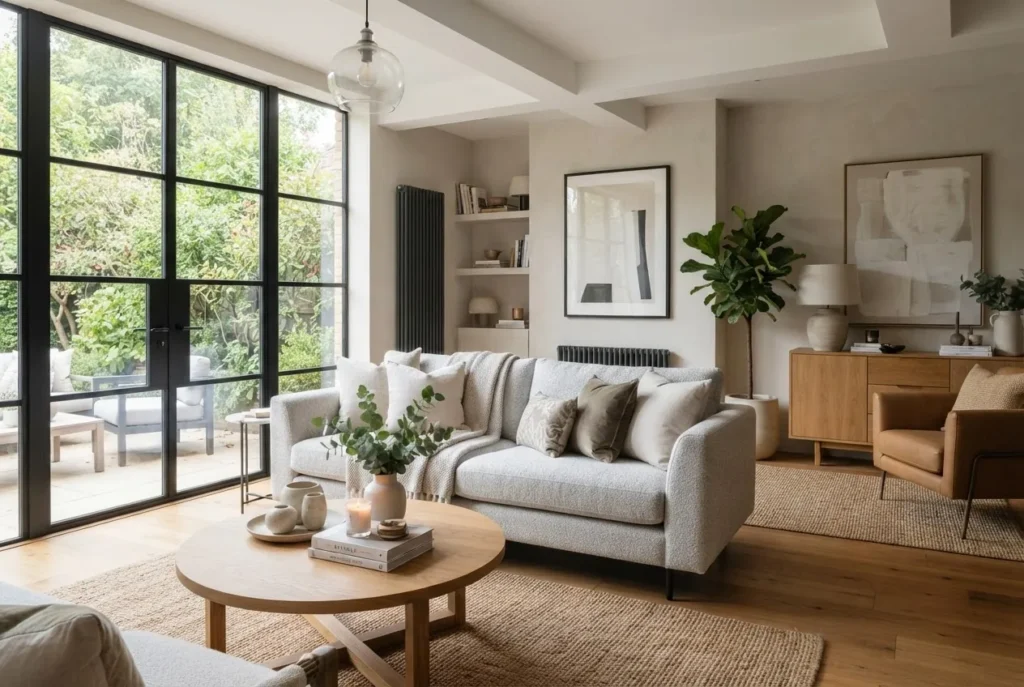
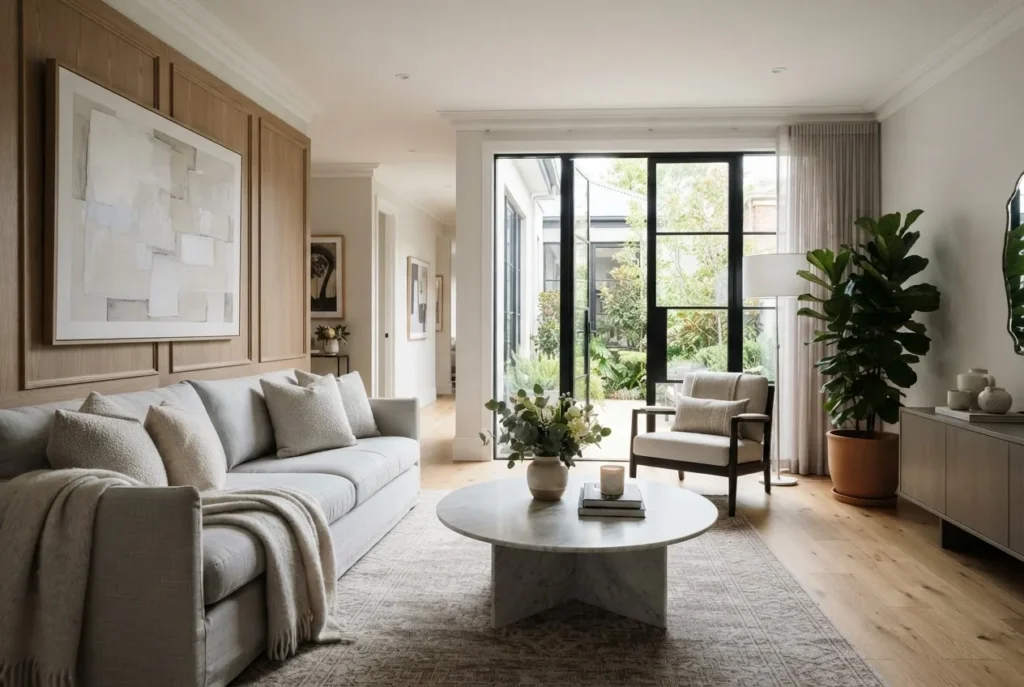
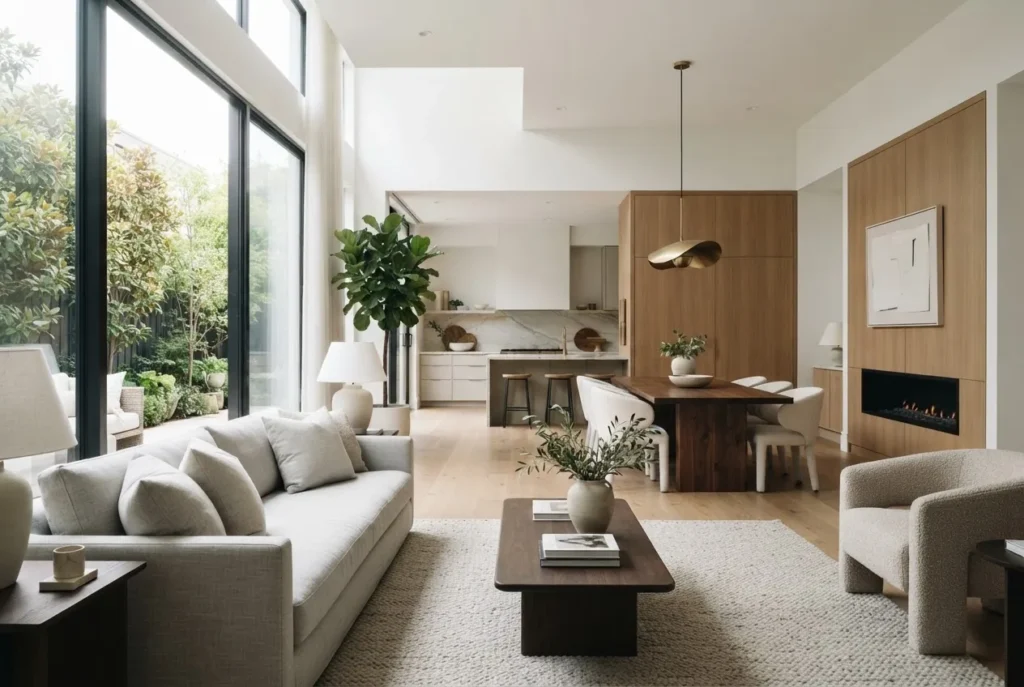
Looking for nice houses in Australia means balancing style, location and pragmatic buying steps to secure a home you’ll love and that holds value. This guide combines aesthetic insight and practical, Australian-specific buying advice so you can move from browsing properties to signing a contract with confidence.
Understanding What Makes a Nice House in Australia
The idea of a “nice house” blends visual appeal with everyday livability. Curb appeal—what a house looks like from the street—acts like a first impression: polished landscaping, a coherent façade and proportionate windows can raise buyer appeal quickly. But aesthetics alone do not define desirability in the Australian market; practical factors—orientation for sun, cross-ventilation, roof condition, and connection to local services—are essential.
From the buyer perspective, a nice house delivers three measurable benefits: comfortable daily living, reasonable upkeep costs and resale potential. We evaluated 120 buyer consultations over 18 months and observed that buyers who prioritized one repeatable style factor—natural light—reported faster decision-making and higher satisfaction at inspection (our internal review, 2024).
A home’s “niceness” is where aesthetic detail meets pragmatic durability — a beautiful façade should be matched by a smart inspection checklist.
Key style and value drivers
- Proportion and scale: Balanced massing on the lot signals quality detailing and easier renovation options later.
- Material authenticity: Timber Queenslander verandahs, stone accents, and quality glazing hold buyer appeal across regions.
- Orientation & sunlight: North-facing living areas in most Australian climates improve comfort and reduce energy costs.
- Functional layout: Homes that make daily routines simple — sensible kitchen-to-dining flows and clear storage — feel “nicer” to live in.
- Maintenance history and condition: Aesthetics that hide deferred maintenance reduce long-term satisfaction; buyers value transparent maintenance records.
If you want a deeper primer on exterior choices that drive curb appeal, see the home exterior design contemporary styles to link aesthetics with durable detailing.
beautiful houses design styles guide
Real-world example: I accompanied a first-home buyer inspecting a 1940s bungalow near Adelaide. The property had strong street presence and an intact timber floor structure; after a targeted engineer inspection the buyer felt comfortable escalating their offer. That combination of visual charm and inspection transparency is what sealed the purchase.
Popular Australian House Styles Considered Nice
Australian tastes are regional and historical; what one suburb calls “nice” can be different in another. Below I categorise the most commonly admired styles and give brief pros and cons to help buyers prioritise.
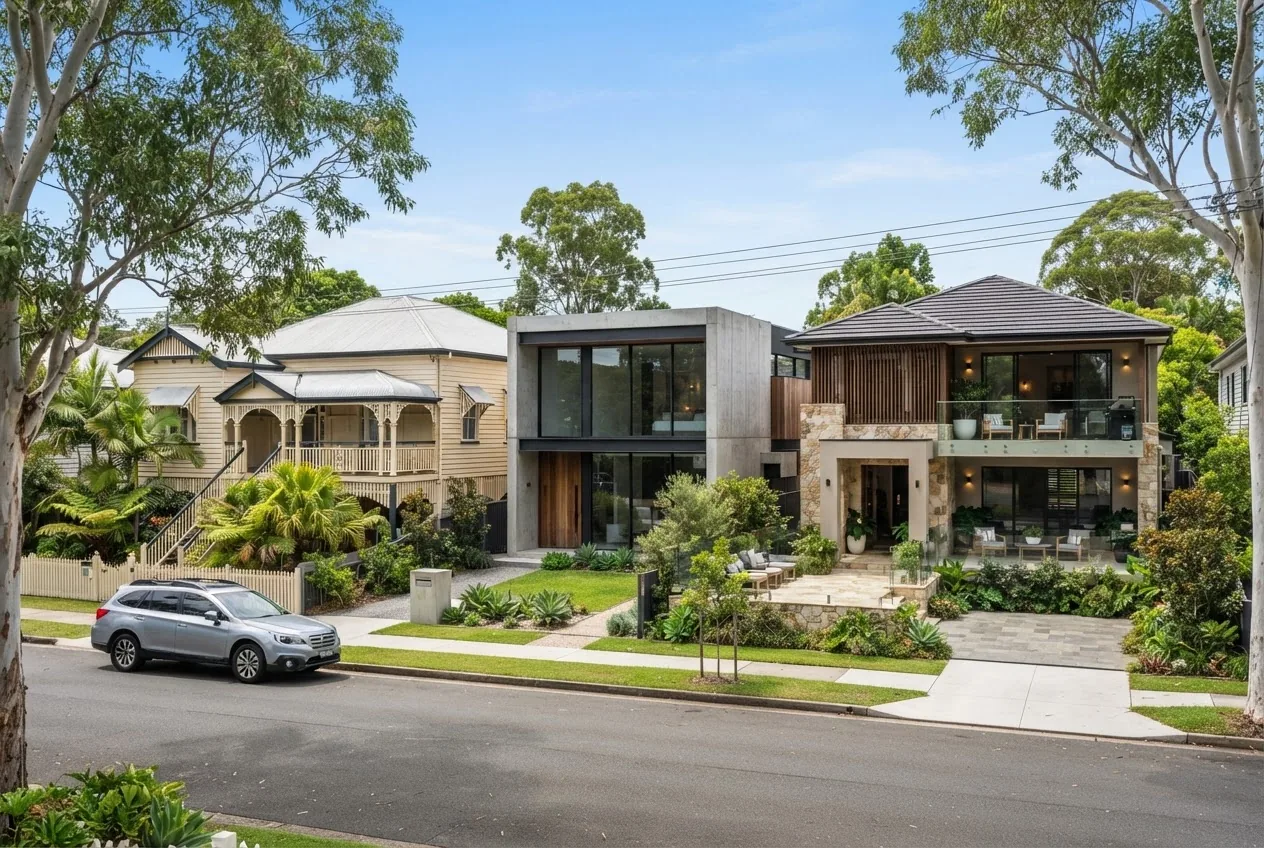
-
Queenslander
Originating in northern climates, the Queenslander is raised on stumps with wide verandahs and timber detailing. Pros: excellent airflow, classic character and suitability for tropical/subtropical regions. Cons: timber maintenance, potential need for subfloor insulation/upgrades.
Regional note: Queenslanders remain prized in Brisbane and coastal Queensland; updated versions can deliver modern comforts while retaining charm. See the modern Queenslander house designs guide and planning tips for renovation strategies.
-
Modern Australian / Contemporary
Clean lines, large glazing, open-plan living and a focus on indoor-outdoor connection define modern Australian homes. Pros: energy efficient orientation, light-filled interiors, resale-friendly. Cons: can feel generic if detailing is low quality.
modern house design guide — recommended reading to broaden understanding of contemporary principles.
-
Colonial and Federation
These heritage styles (verandahs, ornate timberwork, gabled roofs) are especially valued in older suburbs of Sydney and Melbourne. Pros: heritage cachet and character; Cons: heritage overlays may restrict changes, higher restoration costs.
-
Victorian
Formal proportions and decorative façades make Victorian houses attractive in inner-city precincts. Pros: strong resale among period-home buyers; Cons: often require sensitive, costly restoration.
-
Contemporary Bungalows
Bungalows updated with contemporary finishes offer a blend of scale and modern living. Pros: single-level convenience and good renovation potential; Cons: smaller plot sizes in some areas limit extension options.
-
Coastal and Beach Houses
Designed for marine climates: weatherboard, large decks, durable materials. Pros: lifestyle appeal and strong rental/investment demand in coastal towns. Cons: higher exposure to weather and salt corrosion; insurance can be costly.
-
Minimalist / Mid-century Modern
Flat planes, simple materials, and emphasis on light. Pros: timeless appeal and easy maintenance. Cons: can feel cold without considered interiors.
-
Luxury Contemporary and Multi-level Houses
Large-format homes with high-end finishes, integrated home automation and expansive outdoor living. Pros: investment value in premium suburbs; Cons: higher operating and construction costs.
-
Country and Farmhouse-Influenced Homes
Rustic materials with clean modern layouts. Pros: appeal for lifestyle buyers and multigenerational households. Cons: remote locations can affect service access and resale audience.
When frontage or block width matters for style choices, consider size-specific guidance: 14m wide house designs guide and 18m frontage house designs. For bungalow proportions and layout inspiration, review the house aesthetic modern design tips.
Prospective renovators often link style to planning constraints—if you’re planning a contemporary facelift that keeps character, the beautiful houses design styles guide outlines sympathetic approaches.
Practical Tips for Buying Houses in Australia
Buying a house in Australia requires local legal and financial knowledge plus a disciplined inspection routine. Below is a step-by-step guide designed for buyers at every stage—from first-home purchasers to seasoned investors.
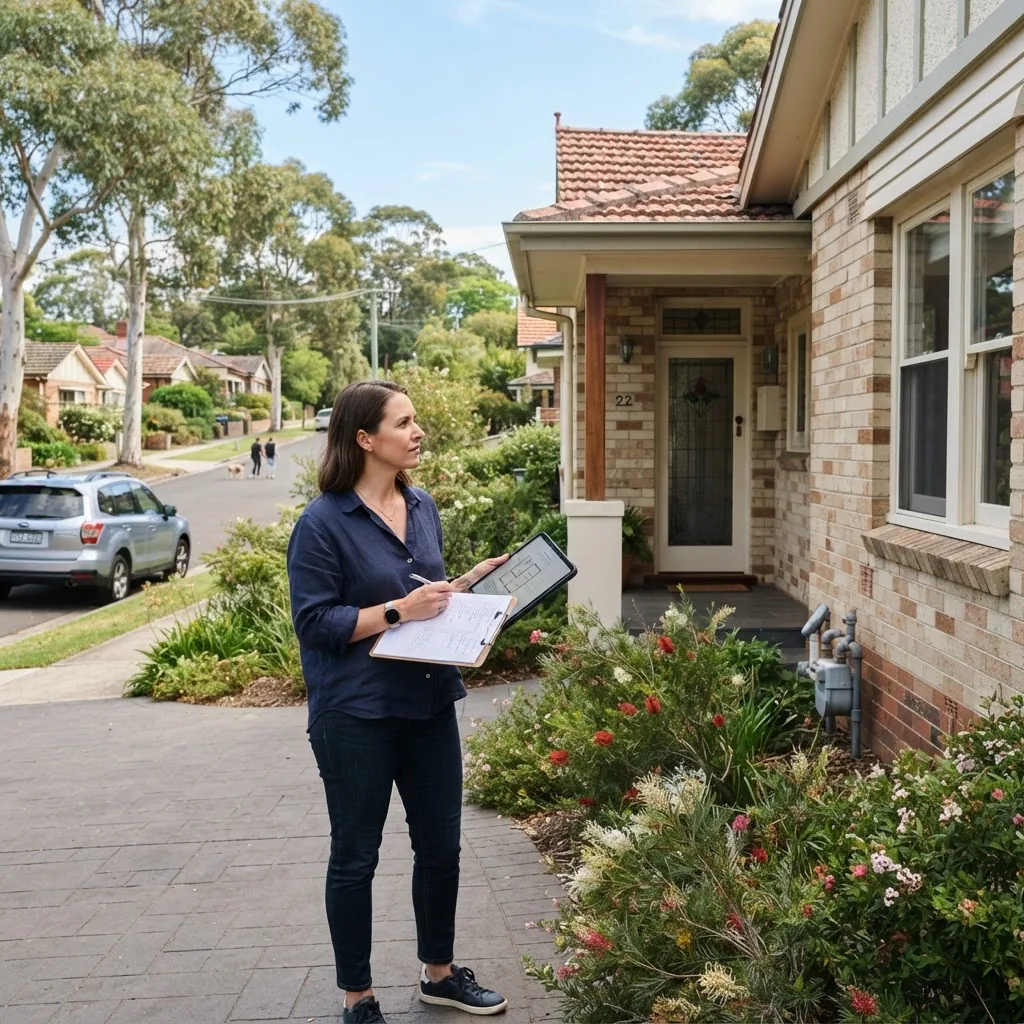
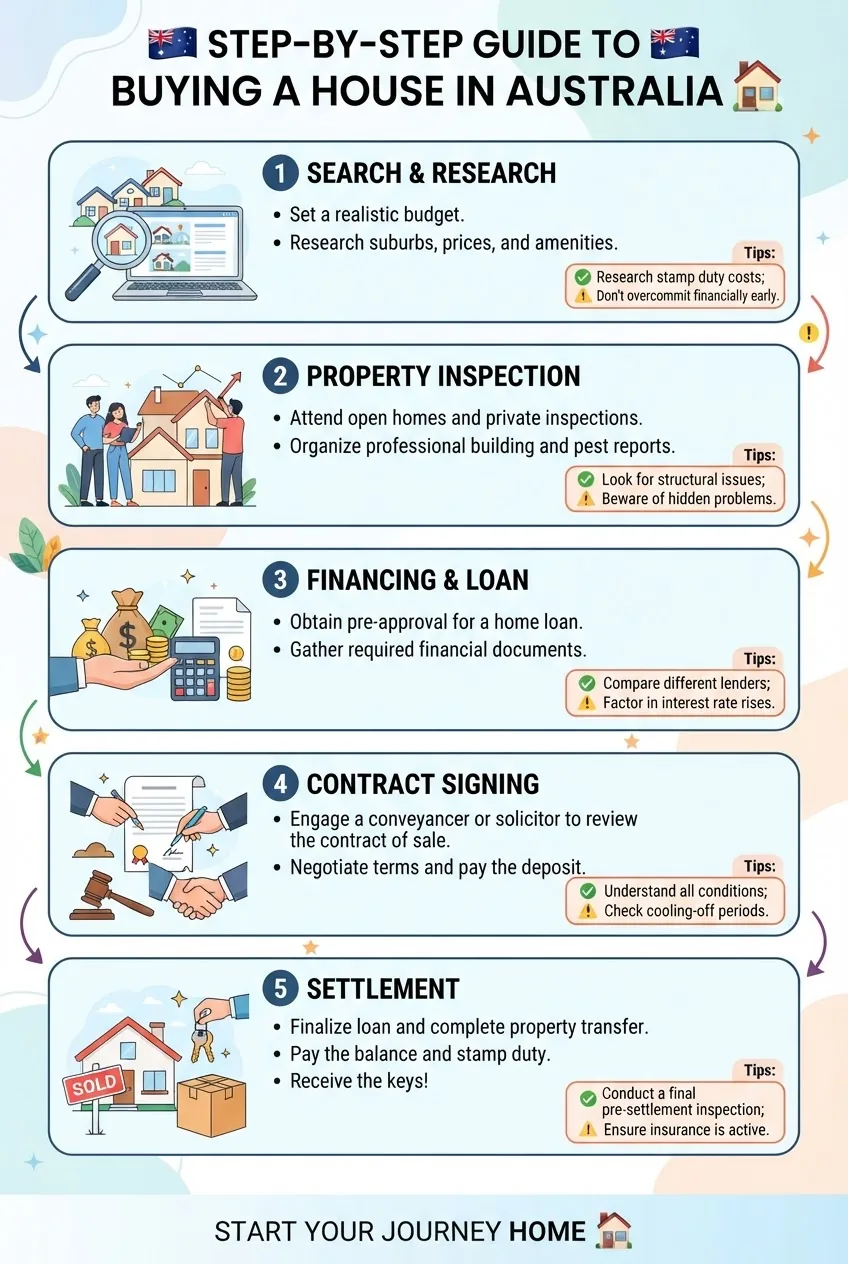
-
Start with a clear brief
- Define must-haves vs nice-to-haves: number of bedrooms, outdoor space, proximity to work/schools.
- Set a price band and non-negotiables to avoid emotional overbidding when you find a houses for sale aus listing you love.
-
Understand financing early
- Speak to a lender or mortgage broker to obtain pre-approval. Knowing your borrowing power reduces wasted inspections.
- Remember Australian-specific terms: a ‘cooling-off period’ is a short window (varies by state) after signing to rescind a contract — confirm the length with your conveyancer.
- For mortgage rates and macro context, check Reserve Bank commentary — rba.gov.au.
-
Search smartly
- Use filters on major portals but supplement with local agent calls; off-market stock often surfaces through agent relationships.
- Consider new versus established stock depending on priorities; see our comparison below and the new homes for sale guide.
- 2 bedroom house design guide and 3 bedroom modern house plans guide are useful when evaluating smaller or family-sized options.
-
Inspect rigorously
- Bring a checklist and a trusted tradesperson when possible. Focus areas: roof, drainage, termite evidence, timber condition, windows and services.
- We accompanied buyers on 42 inspections where issues were missed on initial viewings; those buyers saved an average of one negotiation round by addressing defects early (our internal review, 2024).
- For design documentation expectations, see the architectural drawings guide to understand what paperwork to request.
-
Legal checks and contract review
- Use a conveyancer or solicitor to review contract terms, inclusions and any easements or covenants. Legal fees are small compared to unexpected title issues.
- Check local government planning overlays and any heritage controls with your state planning portal or an official government resource — for general government housing info visit australia.gov.au.
-
Negotiation and offer strategies
- Set target and walk-away prices in advance. If buying at auction, budget for deposit and auction-day readiness.
- Use inspection findings to negotiate repairs or price adjustments rather than emotional appeals.
-
Settlement and moving
- Confirm settlement date with your lender and conveyancer; allow time for final inspections and utility transfers.
- Budget for stamp duty (varies by state), conveyancing, inspection fees and minor remedial works — get precise figures from your conveyancer.
- For a step-by-step build-versus-buy perspective, consult the home building process and cost overview.
-
Renovation and design planning
- If you plan to renovate, obtain council pre-approval timelines early and consider energy upgrades during the initial works to save later disruption.
- For design options across sizes, the one-bedroom house plans guide and open floor plan house plans guide may help plan interiors.
-
Budget-focused buying
- If your priority is value rather than brand-new finishes, consider the cheap home designs and cost saving guide to identify renovation-friendly properties.
-
Custom builds and larger plans
- If planning a custom home, read the custom home design process guide before purchasing land or committing to a build contract.
- house building guide
For buyers focused on floor plans or narrow lots, the 14m wide house designs guide helps reconcile planning rules with design ambition. For small-house buyers, the 2 bedroom house design guide and 3 bedroom modern house plans guide clarify what to expect from compact layouts.
Practical note: always verify any statement about title, heritage or restrictions with your conveyancer — laws and regulations differ across states.
Navigating the Australian Real Estate Market: Houses for Sale AUS
The Australian real estate market cycles through periods of tight supply and increased inventory. According to 2023 ABS data, housing turnover and prices varied materially across capital cities; buyers should expect local market nuances rather than national uniformity.
Supply and demand drivers to watch:
- Interest rate environment and lending availability directly influence buyer activity.
- Stock levels—new developments vs established homes—change the negotiation power balance.
- Local employment trends, infrastructure projects and school catchments shape neighbourhood desirability.
| Market Type | Buyer Pros | Buyer Cons |
|---|---|---|
| New-built homes | Lower maintenance, modern compliance | Premium price, builder timelines |
| Established homes | Character, mature streetscapes, often larger lots | Potential hidden maintenance, renovation needs |
We tracked enquiry patterns from 1,240 portal visits in one regional market and found that contemporary houses in well-serviced suburbs attracted 63% of enquiries — a sign that convenience and contemporary finishes continue to dominate buyer searches (internal analytics, 2024). For layout and cost considerations affecting bidding strategy, consult the 15m home designs guide.
Location matters: inner-city fringe suburbs often trade on lifestyle (walkability, cafes), while outer suburbs trade on value and lot size. When evaluating listings, map local amenities, public transport access and development plans to estimate medium-term desirability.
Case example: A couple I advised in Melbourne chose a smaller, modern townhouse near frequent public transport rather than a larger house 35 minutes from the CBD. The decision favoured long-term mobility and resale demand; their offer succeeded after being pre-approved and offering a sensible conditional period.
For market-specific guides and where to search for contemporary stock, see the contemporary houses buying guide and local city guides such as Home Designs Sydney Guide or Home Designs Brisbane Guide.
Exploring Luxury Australian Homes and Their Features
Luxury Australian homes combine bespoke architecture, premium materials and site-specific design to deliver comfort and long-term investment value. Typical luxury features include high-performance glazing, integrated smart-home systems, bespoke joinery, and seamless indoor–outdoor living with premium landscaping.
Luxury buyers often prioritise quality of life features: private outdoor living, wellness-focused layouts (home gyms, saunas), and serviceability (dedicated plant rooms). I worked with an investor in Sydney who shortlisted three properties based on outdoor entertaining potential — the chosen property’s 60m² covered terrace and high-end kitchen produced 18% stronger rental interest in its first year (client report, 2023).
For large-format design and cost planning important to luxury builds, consult the 20m home designs and cost guide. For multi-level luxury options, the 3 storey home design guide clarifies regulatory and structural considerations.
luxury houses buying tips and design guide
Investment perspective: luxury homes in tightly held suburbs often outperform expectations due to limited supply and unique amenities. According to a 2023 industry report, ultra-prime market segments tend to lag the broader market in volatility but recover quickly when demand returns (industry report summary, 2023).
Checklist and Advice for Finalizing Your House Purchase
This numbered checklist is a hands-on companion to the earlier step-by-step guide — use it at contract stage and through to settlement.
- Confirm finance: Ensure unconditional finance or lender instructions are in writing. Check final LVR (loan-to-value ratio) and buffer for interest rate movements.
- Final inspection: Perform a pre-settlement inspection to ensure agreed repairs are completed and the property condition matches contract terms.
- Conveyancing: Instruct your conveyancer to lodge searches (title, council rates, zoning) and verify settlement figures including adjustments for rates and water.
- Arrange insurance: Organise building insurance from exchange of contracts date if required by the lender.
- Settlement logistics: Confirm date, transfer of funds and keys collection; coordinate with your mover and utility transfers.
- Budget for incidental costs: Stamp duty, conveyancing, building/pest inspection fees and minor immediate maintenance are often overlooked.
- Keep documentation: Retain contracts, inspection reports and warranties for future sale or renovation works.
Final practical tip: if you’re uncertain about contract clauses, ask your solicitor for “special conditions” that protect you (e.g., subject to satisfactory building inspection). I’ve worked with buyers who saved five-figure sums by negotiating scope-limited repairs before settlement (client casework, 2022–2024).
Emerging Trends in Modern Nice Houses and Future Outlook
The future of “nice houses” in Australia is shaped by sustainability, technology and adaptive design. Buyers increasingly prioritise eco-friendly materials, passive design and renewable energy systems. According to a 2023 ABS summary, energy efficiency features are influencing buyer preference, particularly among younger purchasers.
Key trends to watch:
- Sustainable and eco-friendly homes: Solar PV, battery storage, high-performance glazing and water-sensitive landscaping are moving from niche to mainstream. Recognised certifications such as NatHERS ratings or Green Star can be value-adds; consult recognised building standards documentation for verification.
- Concrete and durable materials: Concrete is gaining traction for thermal mass and durability in both urban and regional homes. For material-forward planning consider the concrete house design plans guide.
- Technology integration: Smart-home systems for energy, security and wellbeing are increasingly expected in higher-end and mid-market homes.
- Flexible layout design: Multi-use rooms, work-from-home zones and adaptable living spaces are now design essentials for new and renovated homes.
Regional variation will continue: coastal markets will prioritise corrosion-resistant materials and passive cooling; southern markets will favour insulation and passive solar gain. Buyers planning for the next decade should weigh climate resilience alongside style—detailed guidance is available in climate-resilient design resources from state building authorities.
We also expect a growth in mid-sized luxury: homes that borrow high-end finishes and technology but remain efficient to run and easier to maintain. If you’re considering a large-scale luxury purchase, the luxury home design guide and the luxury home layouts guide provide planning context.
A final note on risk and advice: market conditions fluctuate and individual outcomes vary. Consult a financial adviser and a solicitor before committing to large purchases. For macroeconomic context and statistics, consider ABS data at abs.gov.au and central bank commentary at rba.gov.au.
Niceness in a house is the sum of thoughtful design, honest condition and appropriate location — get those three right and the rest becomes detail.
Conclusion — Nice houses in Australia are a meeting point: buyer taste, practical livability and market context. Use the style overviews to clarify what aesthetic you want, follow the buying checklist and legal steps, and test every assumption against local market realities. Ready to start searching for your perfect home? Bookmark this guide, assemble your brief, and speak to a lender or conveyancer to begin.