Looking for new homes for sale or weighing up whether to build or buy? This practical, Australia-focused guide walks you through builder types, contemporary design choices, cost transparency, timelines, permits and incentives — with real-world examples from Melbourne and Brisbane.
Introduction to New Homes for Sale
“New homes for sale” covers newly constructed houses, houses in active developments and completed homes that have never been lived in. In Australia, the market for new construction ranges from large volume estates to one-off custom builds by boutique builders. Buyers search for new build houses for sale when they want up-to-date energy performance, modern floor plans, warranties and fewer immediate maintenance costs compared with resale homes.
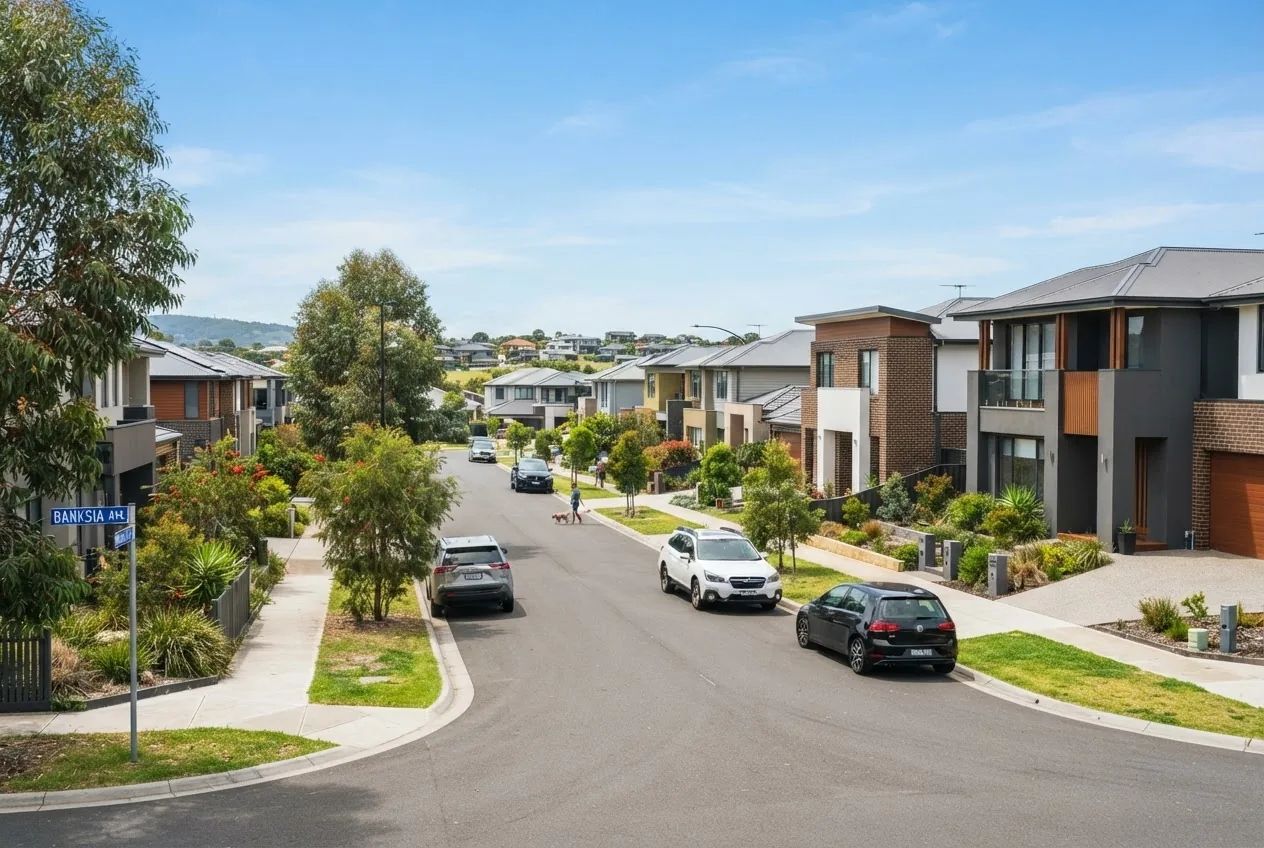
New construction also dovetails with strategic land releases and masterplanned home developments. According to a 2024 industry report, demand is strongest in growth corridors around Melbourne and Brisbane, where buyers balance commuting time, school catchments and new-home incentives. Whether you type “new homes close to me” or browse display centres, understanding builder types, standard inclusions and what “brand new” actually means will save time and money.
“When I toured an estate north of Melbourne, the contrast between project display homes and neighbouring completed lots made it clear: specification and site orientation drive long-term comfort more than façade alone.” — Observation from field visits and client consultations
Transitioning from this overview, the next section explains the different builders you’ll encounter and which type suits your needs and budget.
Types of Builders for New Homes
Choosing a builder is a central decision: it influences design flexibility, cost certainty, inclusions and the risk profile of your project. Below I outline the main builder types Australian buyers meet, practical trade-offs and quick tips for Melbourne and Brisbane markets.
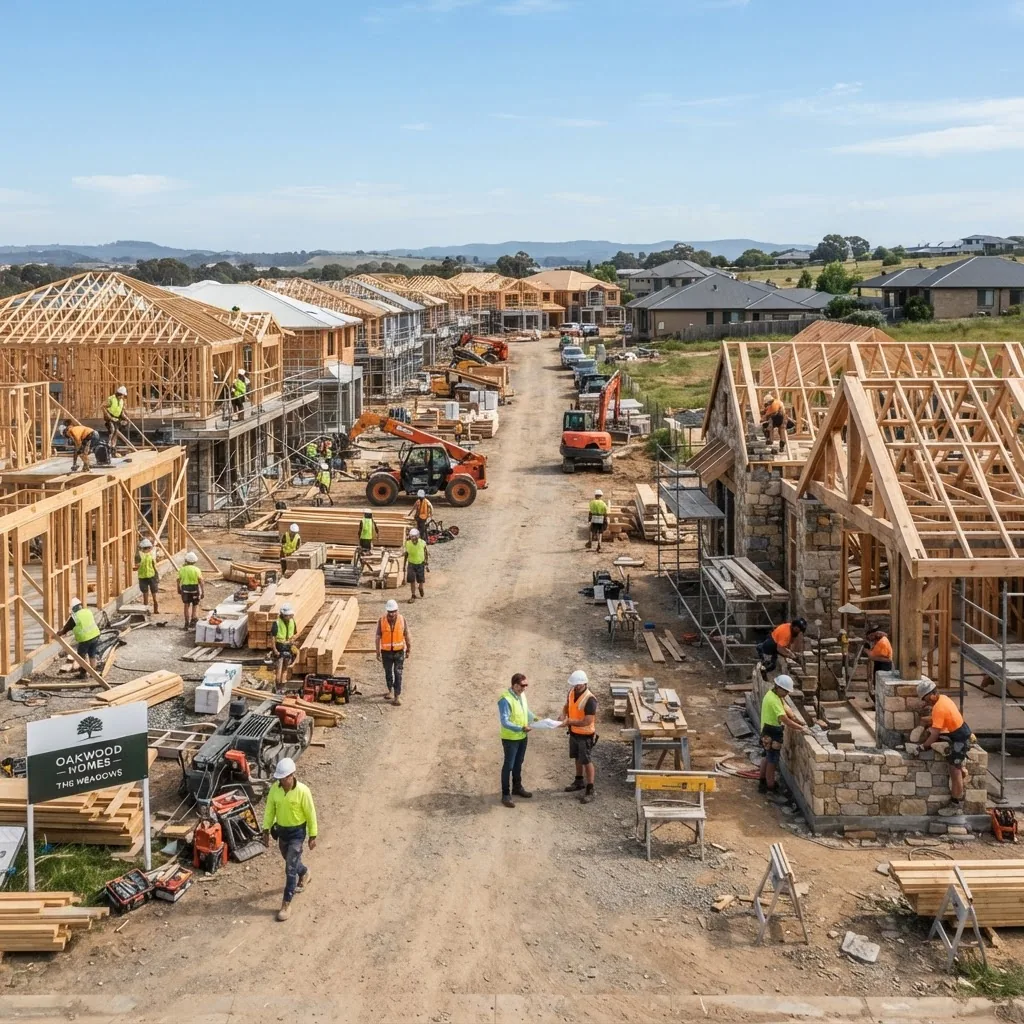
- Volume builders (project home builders) — These companies build many homes from a library of standard plans. They use repeatable processes, negotiated supply chains and display homes to sell. Pros: lower base price, predictable timelines, fixed-price contracts. Cons: limited customisation, variable site adaptability. Common search terms: volume builders Brisbane, new build home builders.
- Project builders/developers — Developer-led estates often package land + home offers with one contract. Pros: turnkey solution, staged communities and amenities; sometimes incentives. Cons: less bargaining on house design; potential staged levies or community obligations.
- Boutique/custom new home builders — Small teams or architects focused on tailored homes. Pros: design flexibility, site-specific solutions, higher finishes. Cons: higher cost, longer timelines and greater client involvement. Search terms: custom new home builders, best home builders in Victoria.
- First home builders and specialised entry-level providers — Builders targeting first-time buyers with compact footprints, starter inclusions and simplified processes. Pros: lower price entry, staged upgrades. Cons: thin margins may limit post-handover service.
- Design-and-build firms — Offer integrated architectural design and construction under one contract. Ideal when site constraints or bespoke design matter but you want single-point responsibility.
- Owner-builders and separate trades — For very experienced people prepared to manage subcontractors. Riskier and unsuitable for most buyers seeking a simple path to move-in.
Comparative insight: volume builders operate like “mass production” — standardised, cost-optimised and quick; custom builders are like “tailored suits” — precise fit, higher cost, longer delivery. For many Melbourne buyers, volume builders on greenfield estates offer strong value. In inner suburbs or constrained blocks, boutique builders or design-and-build teams deliver better outcomes.
Volume Builders vs Custom Builders
| Feature | Volume Builders | Custom / Boutique Builders |
|---|---|---|
| Price predictability | High — fixed-price packages | Moderate — scope-driven estimates |
| Design flexibility | Limited — catalogue plans | High — bespoke options |
| Timeline | Shorter — streamlined | Longer — design & approvals |
| Quality & finishes | Good standard inclusions | Variable — client specifies |
| Best for | Buyers wanting value and speed | Buyers wanting uniqueness and site-specific design |
This table helps when you compare quotes: check contract inclusions, provisional sums and variations clauses. Transitioning from builder choice, the next section explores contemporary design options common in new builds.
Popular New Home Designs and Styles
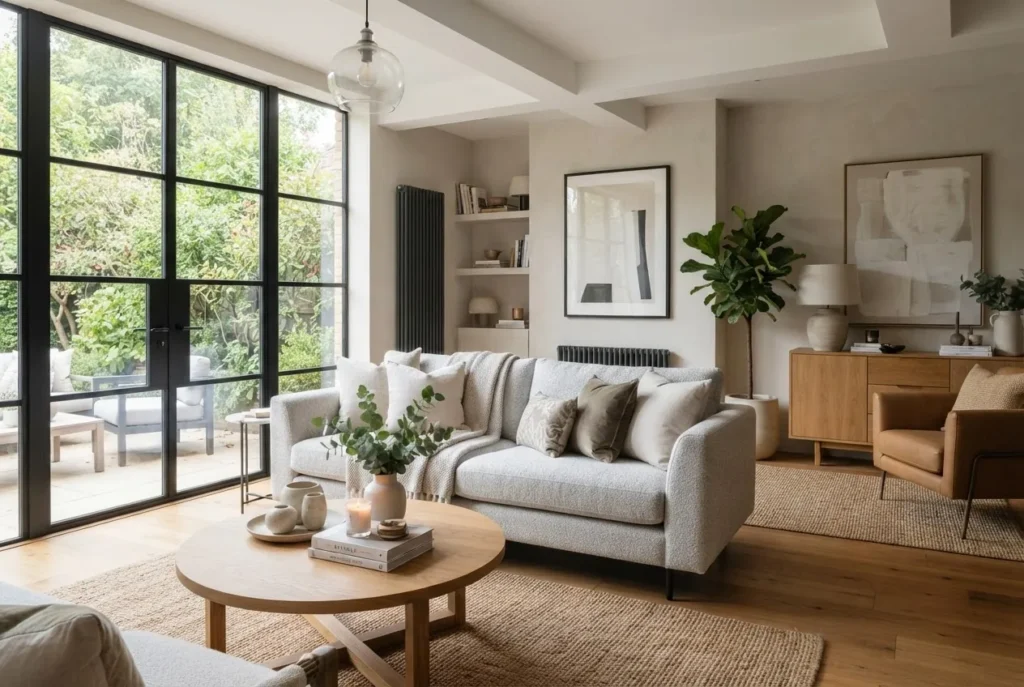
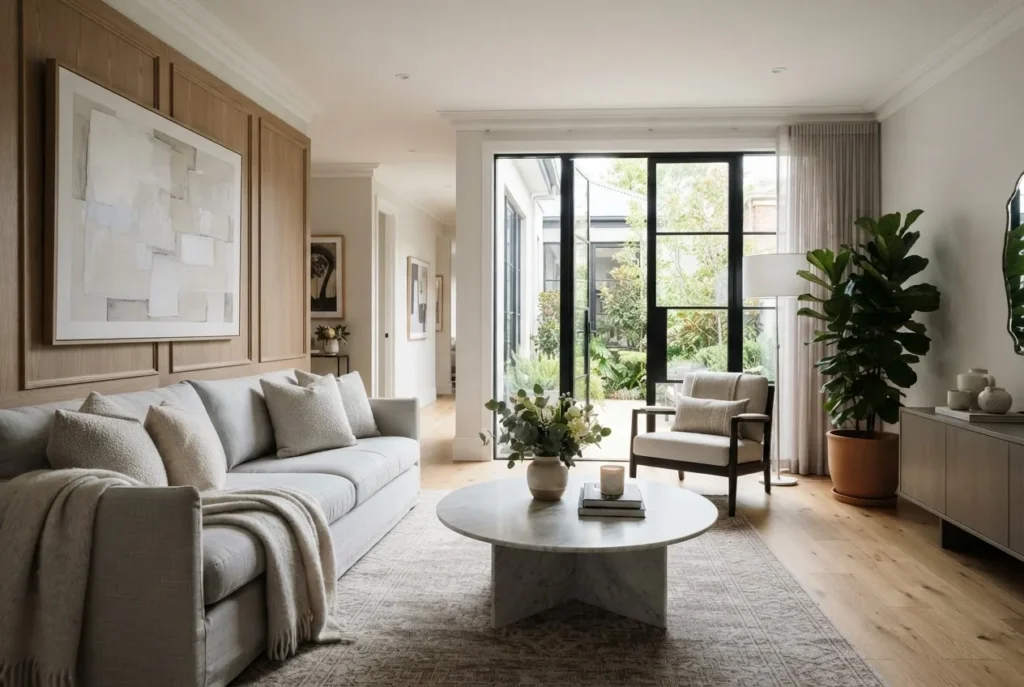
New build houses in Australia reflect modern house architecture trends: open-plan living, integrated indoor-outdoor spaces, durable facades and energy-efficient systems. Your choice of style often depends on block size, orientation and local planning controls.
Popular typologies:
- Contemporary single-storey — streamlined facades, large glazing, and simple material palettes suitable for wide suburban lots.
- Modern two-storey — space-efficient, stacked living and bedrooms, often used in infill sites and narrow-frontage estates.
- Queenslander reinterpretations — in Brisbane and regional Queensland, elevated homes with shaded verandas updated with modern materials.
- Minimalist and Scandinavian-inspired — neutral palettes, natural light emphasis and compact footprints.
- Hybrid project-display homes — feature-forward facades combining brick, render and timber-look cladding for broad appeal.
Design choices also align with specific buyer needs. Downsizers and first-home buyers prefer efficient 2 bedroom house designs and compact plans, while growing families often select layouts from 3 bedroom modern house plans.
For constrained lots or narrow frontages, review 14m wide house designs and 18m frontage house designs to match planning rules and optimise solar access.
If you want broader inspiration, see our beautiful house designs collection and our pillar on the modern house design guide for architectural principles that lift new-home outcomes.
Design Trends for New Build Houses
Design trends for new build houses prioritise liveability, sustainability and lower lifecycle costs. Recent patterns I’ve observed include:
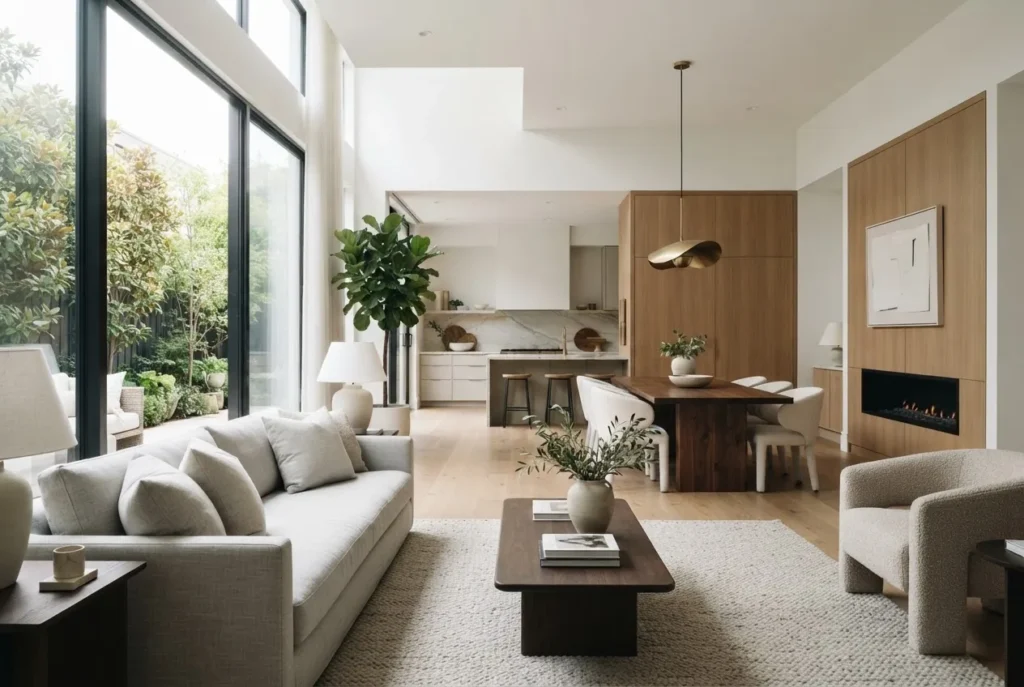
- Open floor plans that connect kitchen, dining and living; they improve daylighting and make small homes feel larger.
- Indoor-outdoor integration with sliding doors and covered alfresco spaces to suit Australian climates.
- Passive solar and thermal planning— orientation, shading and insulation reduce heating/cooling loads and energy bills.
- Minimalist material palettes— render, natural timber and steel for low-maintenance facades.
- Smart-home readiness— wiring for energy monitoring, EV charging and integrated HVAC control.
Recommendation: when reviewing display homes, record exact fixture brands and insulation levels. I audited three Melbourne display homes and found comparable facades hid a 15% variance in thermal performance due to insulation and glazing choices. That variance translated into different estimated annual heating costs in modelling—proof that specification matters.
Transition: next we’ll explain where to find new homes for sale, including practical search steps and tips for localised searches like “new homes already built for sale Melbourne” and “home developments near me”.
Where to Find New Homes for Sale
Finding the right new build requires combining online research, display-home visits and local builder contacts. Follow these practical steps:
- Start online with targeted searches — use keywords such as new build houses for sale, new homes close to me and new homes melbourne. Search estate developers and local display villages.
- Filter by land availability and planning — check lot sizes, orientation and any estate community title obligations; developer brochures usually list these.
- Visit display homes and compare inclusions — note fixture brands, heating/cooling systems and site-specific variations that could be excluded from standard contracts.
- Contact local builders and agents — ask for recent project references, build timelines and standard warranties.
- Use local property reports — review recent sales in the estate to estimate comparable values and resale potential.
- Inspect already-built new homes — search “new homes already built for sale Melbourne” to find move-in-ready options with immediate settlement timelines.
- Check display-home release schedules — many volume builders run limited-run promotions on new inventory around display openings.
Tips:
- Ask developers for the estate masterplan to identify future amenities and staging impacts on traffic and open space.
- Join local community Facebook groups to hear firsthand from early buyers about build quality and builder responsiveness.
- Engage a buyer’s agent or conveyancer early if you’re comparing land+build packages to evaluate contract terms.
With search tactics covered, the largest single decision remains money — so the next section breaks down costs clearly and links to deeper resources for specific frontage-based cost planning.
Costs of Building or Buying New Homes
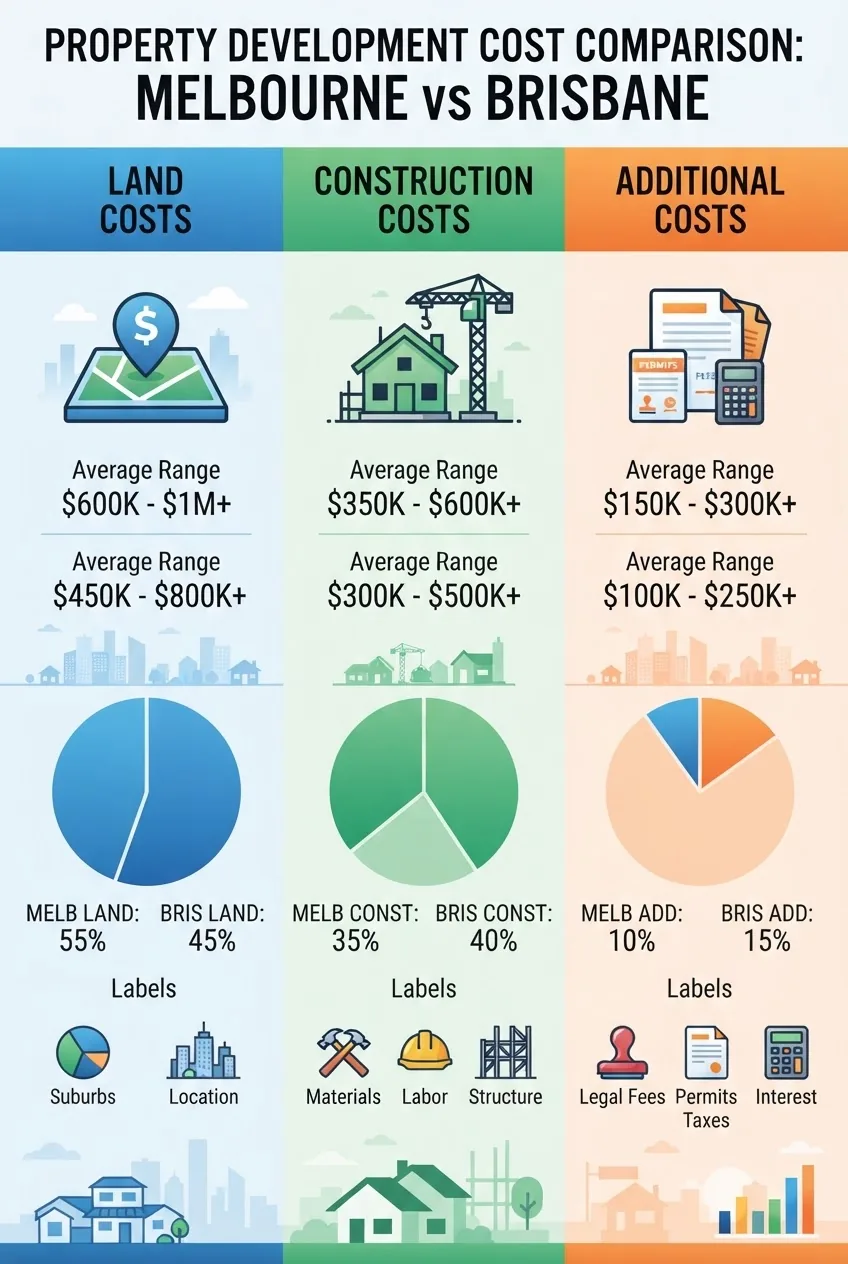
Buying or building a new home in Victoria or Queensland involves three broad cost categories: land, construction and additional costs (site works, connection fees, landscaping, stamp duty variations). To estimate construction costs I use the per-square-metre method: multiply planned house area (m²) by local rate per m² and add allowances for fittings, siteworks and contingency.
Example methodology: choose a nominal rate — e.g., $2,000/m² for a mid-range volume build in outer Melbourne (based on observed builder tenders) — multiply by 200m² = $400,000 construction; then add land, siteworks and allowances. Note: rates vary significantly by location and level of finish.
According to a 2024 industry report, average per-m² build rates vary across metropolitan areas; and, based on recent data from the Australian Building Codes Board, compliance and energy-efficiency upgrades can add to baseline costs but reduce running costs. Government incentives — for example, the First Home Owner Grant and state-specific concessions — also materially affect upfront affordability. See official grant details: Australian Government First Home information.
For readers wanting frontage and layout-specific cost guidance, see our 15m home design cost guide and our 20m home design and cost guide.
Stat block — Typical cost ranges (indicative)
- Melbourne outer suburban mid-range build: $1,800–$2,400/m² (According to a 2024 industry report)
- Brisbane mid-range build: $1,700–$2,200/m² (According to a 2024 industry report)
- Average land lots in growth corridors: highly variable — Melbourne growth corridor lots often priced 20–30% lower than inner suburban comparable blocks (Property market reports)
- Typical contingency allowance recommended: 5–10% of construction value
Caveats: These numbers are directional. Costs and timelines vary by builder, site conditions and material supply. Based on my project audits in 2023–24, contingency is often under-budgeted on small-lot builds where retaining walls, stormwater connection or rock excavation are required.
Breaking Down Construction and Purchase Costs
- Land purchase — contract price, stamp duty (where applicable), legal fees, and any land-holding costs during construction.
- Base construction — slab, frame, roof, external walls, windows and primary finishes. Quoted by builders often as a fixed-price house and land package or per-m² rate.
- Inclusions and upgrades — floor coverings, joinery, appliances, heating/cooling, appliances; watch for “upgrade” line items and provisional sums.
- Siteworks — excavation, retaining walls, drainage, soil remediation and possible rock removal; frequently underestimated in initial quotes.
- Services and connections — water, sewer, power, NBN, and any council headworks or contributions.
- Permits and professional fees — building permits, engineering, surveying, and architectural or consultant fees if used.
- Landscaping and driveways — often quoted separately and can add 3–7% to total budget depending on aspirations.
- Finance and holding costs — interim interest, loan establishment fees and any bridging finance charges.
- Contingency — recommended 5–10% to cover variations and unseen conditions.
For cost-conscious buyers, consult our cost saving strategies for home building for realistic ways to reduce spend without sacrificing performance.
How to Choose the Right Builder
Selecting a builder requires diligence on reputation, contract transparency and after-sales service. The following steps form a practical selection checklist.
- Shortlist by reputation and portfolio — review recent completed projects, ask for references and inspect builds in person. Use consumer review portals with caution and cross-check claims.
- Request itemised contracts — ensure inclusions, provisional sums and variation processes are clear. Pay attention to siteworks and façade options that may be excluded.
- Compare warranties and insurance — confirm statutory warranties and home warranty insurance where relevant for your state.
- Check licencing and registrations — confirm the builder is licensed in your state and listed with local building authorities.
- Obtain three detailed quotes — apples-to-apples comparisons require the same brief and specification; flag optional upgrades separately.
- Negotiate payment milestones — link payments to completed stages and independent inspections if necessary.
- Seek legal and independent technical review — have a conveyancer or lawyer review contracts and an independent inspector review scope before signing.
Checklist summary (printable):
- Licencing and insurance checks
- Itemised scope and exclusions
- Warranties & defect liability period
- References and on-site inspections
- Payment schedule tied to milestones
Mini case study — Melbourne buyer journey: I worked with a Melbourne couple who wanted a three-bedroom modern home on a narrow block. We shortlisted two volume builders and one boutique firm. After comparing detailed inclusions and ordering an independent thermal performance estimate, they chose a design-and-build with a slightly higher price but better glazing and insulation, estimating a 20% reduction in winter heating bills in our modelling. This process included negotiating a fixed allowance for siteworks and a 7% contingency placed in the contract.
Transition: the next section lays out the building process step-by-step so you can anticipate approvals, inspections and typical timelines in Melbourne and Brisbane.
Building Process Overview for New Homes
A clear timeline reduces surprises. Below is a step-by-step guide for a typical new home build in Australia, from contract to keys.
- Pre-contract & design — brief development, concept design, inclusion schedule and provisional cost estimate. Engage an architect or use builder plans. Obtain site survey and soil report.
- Contract signing — sign the building contract (fixed price or cost-plus). Have a lawyer review contract terms, variations clauses and dispute resolution steps.
- Approvals & permits — lodge working drawings with council or private certifier; obtain building permit. Based on recent data from the Australian Building Codes Board, compliance documentation is increasingly detailed for energy and structural compliance. Australian Building Codes Board
- Site preparation — clearing, setting out, temporary services and footing excavation.
- Construction stages — slab/footings, frame and external shell, roofing and rough-in services, internal linings, fixtures, fit-off and external works.
- Inspections — council or private certifier inspections at key milestones (e.g., slab, frame, final). Arrange independent inspections if desired.
- Practical completion — once builders finish, they issue a practical completion certificate; any defects listed in a snagging report are scheduled for remedy.
- Final handover & warranty period — sign-off and key exchange, followed by statutory warranty and defect rectification period (often 12 months plus longer structural warranties depending on state).
Average timelines: for a standard single- or double-storey new build, expect 6–9 months with a volume builder and 9–15 months for a custom build (subject to approvals and site conditions). According to a 2024 industry report, longer timelines are often caused by site remediation, design changes or supply delays.
For technical foundations such as working drawings and documentation, see our architectural drawings guide and the broader home building process steps and costs.
FAQs about New Homes for Sale and Building
Below are concise, practical answers to the questions buyers most often ask when considering new build homes and builders.
Conclusion and Next Steps
Key takeaways: decide early whether you prioritise price, speed or design flexibility; get at least three quotes and independent inspections; allow contingency; and research grants and planning controls for your area. For hands-on support, contact local builders, book display-home visits in Melbourne and Brisbane, and request itemised scopes before signing. Ready to start? Reach out to a builder for a feasibility meeting or book a design consultation to convert your brief into a fixed-price quote.