contemporary home decor — By the end of this hands-on guide you’ll have a complete, room-by-room styling plan, a shortlist of contemporary home accents to buy, and a furniture-layout you can implement in 2–5 days per room; skill level: beginner to intermediate DIYer working with simple tools.
This guide assumes you want practical, actionable advice (not architectural plans) and focuses on finishing interiors with accents, materials and layout decisions that bridge modern architecture and everyday living.
Before you start
- Tools: tape measure, painter’s tape, level, screwdriver, cordless drill, fabric swatches, sample paint chips.
- Materials: a notepad, camera or phone for room photos, tape to mark furniture positions, sample materials (wood, metal, fabric swatches).
- Time: set aside 2–5 hours per room for planning and a weekend per room for light updates (switch cushions, hanging art, small furniture moves).
- Budget ranges: low ($100–$500), mid ($500–2,500), high ($2,500+) per room depending on furniture and lighting choices.
Introduction to Contemporary Home Decor
This hands-on guide will show you how to style interiors using the practical principles of contemporary home decor — clean lines, balanced form and function, and accents that finish a modern home. You’ll learn step-by-step how to select accents, choose materials and lay out furniture so rooms feel cohesive, inviting and current rather than cold or purely architectural.
Contemporary design focuses on simplicity and timeless detailing rather than fashion-driven trends. Think of the approach like an artist’s palette: a neutral ground with deliberate pops of color and contrasting texture. Many readers want to apply these ideas to an already-built modern house; if you need architectural references first, see Modern House Design Guide: Contemporary Style and Planning. For the technical drawings that sometimes shape decor decisions, check Architectural Drawings and Design Costs.
According to a 2024 Australian Interior Trends report, homeowners prioritise neutral palettes and tactile materials when finishing contemporary homes — this guide converts those trends into clear steps and buy lists (source: industry report).
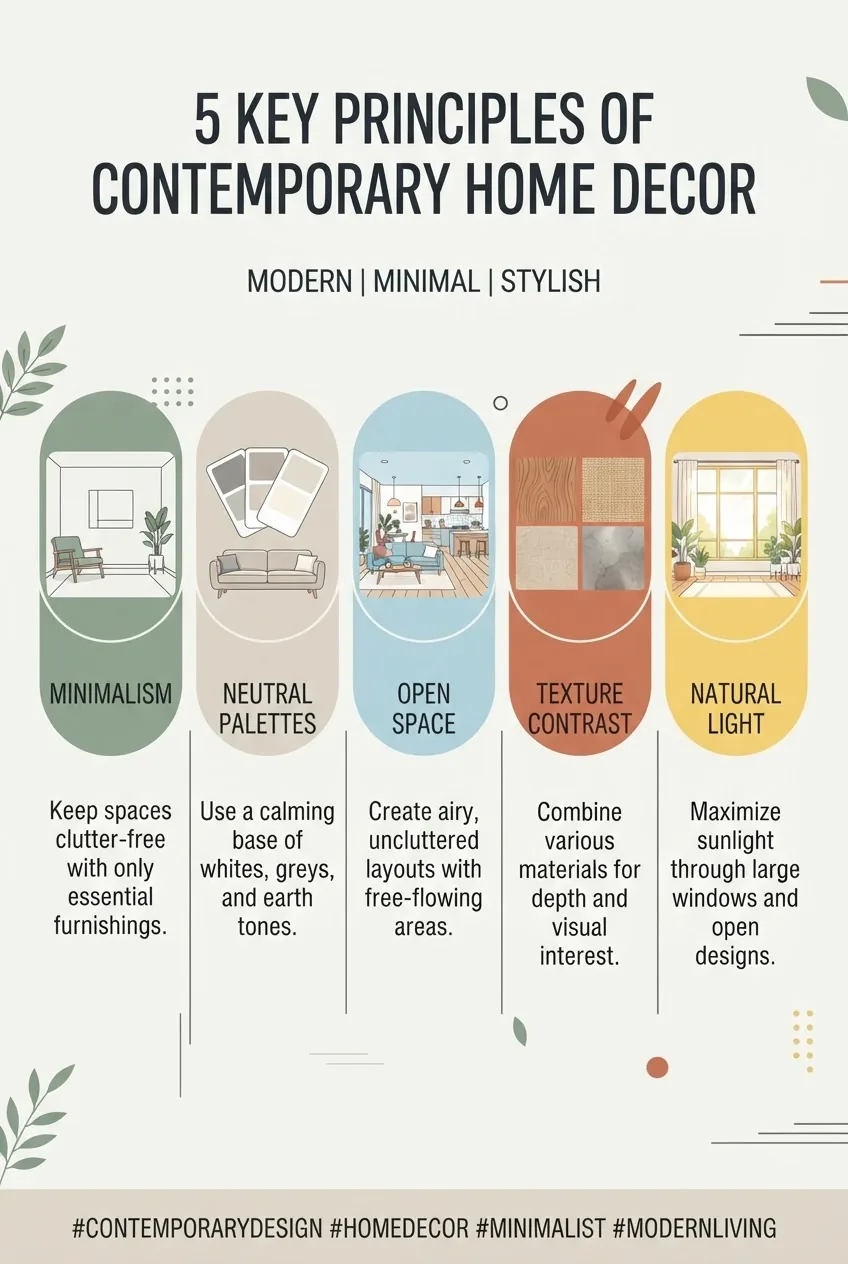
Key Principles of Contemporary Home Decor
Use the following principles as non-negotiable checks when you design or style any room. Each is written as a practical rule you can apply immediately.
- Prioritise minimalism and purposeful pieces. Keep visible surfaces lean: limit tabletop displays to 3–5 meaningful items and use closed storage for small clutter. Minimalism here means “edited” not “empty.”
- Work from a neutral color base. Establish walls, large rugs, and fixed elements in whites, warm grays or earth tones. Reserve saturated colors for accents (one per room) so the eye has a focal point.
- Create open space and maintain flow. Allow 600–900 mm clear walkways in living areas and 800–1,000 mm for main circulation in open-plan kitchens. Keep sightlines clear from entry to focal features like artwork or windows.
- Maximise natural light. Use light-filtering blinds, low-profile window hardware and reflective surfaces (glass, polished metals) near light sources. Natural light is a principle — plan accent placement to benefit from daylight.
- Balance form and function. Choose pieces that work well visually and practically, for example a low-profile sofa with durable, stain-resistant fabric and a removable cover.
- Emphasise texture contrasts. Combine smooth finishes (glass, lacquer) with tactile elements (wool, linen, raw wood) to avoid a sterile result. Texture is a major tool for warmth.
- Layer lighting — not just more brightness. Use ambient, task and accent lighting in tandem (see the lighting section for settings and lumen targets).
- Prioritise longevity and sustainability. Invest in a few high-quality anchor pieces and replace small accents seasonally to update without waste.
Transition: With principles clarified, the next section lists the specific accents that animate contemporary rooms and how to select them practically.
Essential Contemporary Home Accents to Transform Your Space
Accents are the finishing notes that make a contemporary interior feel purposeful. Use them to add scale, texture and visual rhythm without clutter. Each example below includes a practical use-case and a recommended range so you can act immediately.
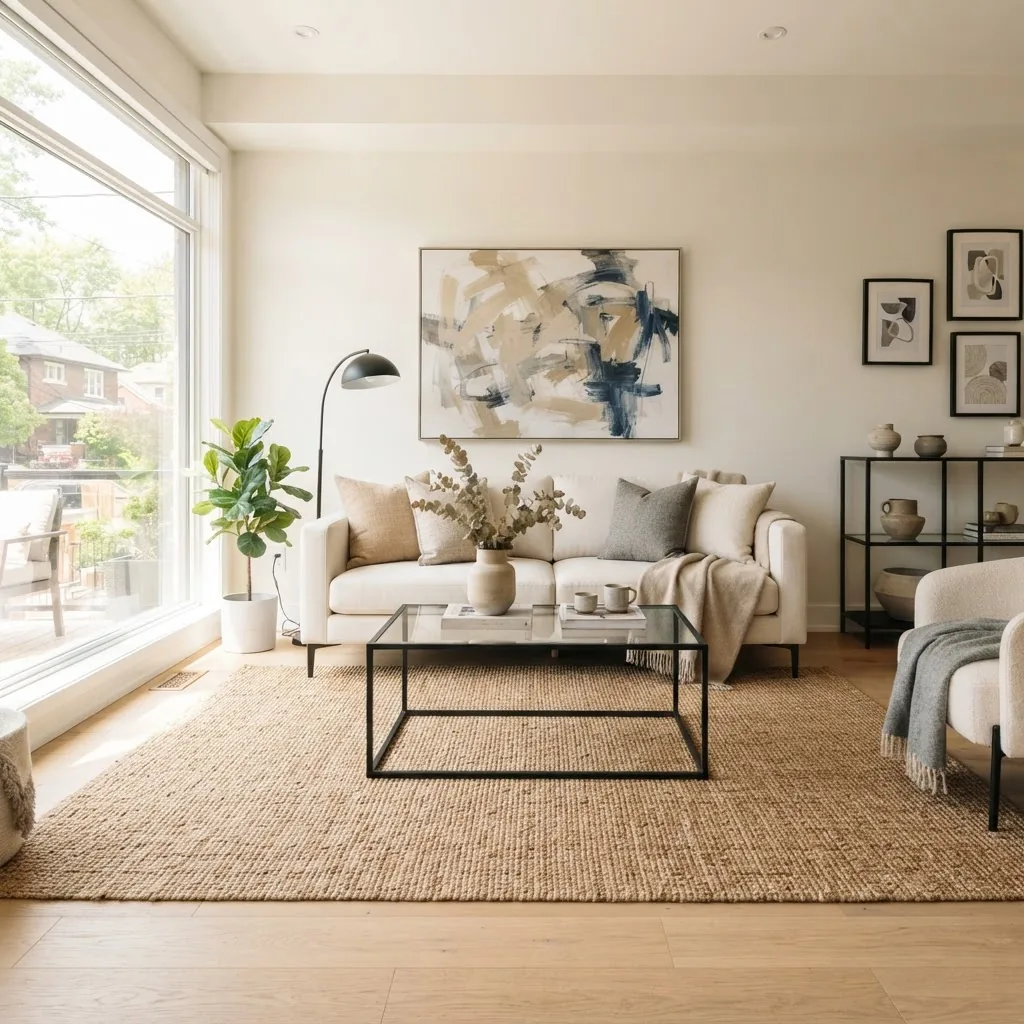
- Throw cushions and textiles. Use 2–4 cushions on a three-seat sofa in mixed textures: one wool or boucle, one linen, one leather accent. Pick one cushion in a bold accent color (e.g., deep teal or ochre) sized 45×45 cm for visual pop.
- Area rugs that define zones. A rug should extend under the front legs of sofas/chairs by 25–40 cm and be sized so the biggest pieces sit on it. Typical rug sizes: 240×330 cm for living rooms, 160×230 cm for small lounges.
- Artwork as a focal anchor. Choose one major piece (minimum 60% of wall width for above a sofa) or a curated gallery with consistent frames. Abstract or geometric works complement contemporary interiors; hang art 150–160 cm from the floor to the centre for standard sightlines.
- Statement lighting fixtures. A sculptural pendant or large LED floor lamp can serve as an accent and primary light source. For pendant sizing: drop no lower than 750–850 mm above a coffee table in open spaces.
- Minimalist coffee and side tables. Aim for a coffee table height within 2–3 cm of sofa seat height; materials like glass and metal reduce visual weight. For multifunctional needs, choose a nested set (two pieces) to vary scale.
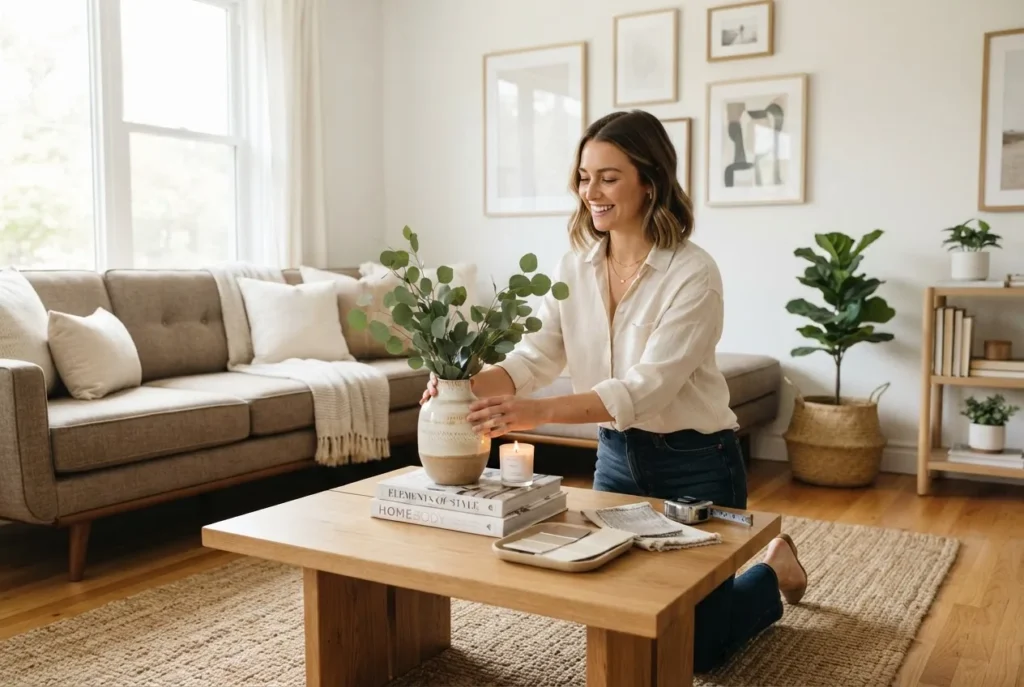
- Ceramics, vases and small sculptures. Use odd-numbered groupings (3 or 5) and vary heights by 100–200 mm. Natural glazes and matte finishes read contemporary and tactile.
- Mirrors and reflective accents. A large leaner mirror (min 900 mm height) opens space and bounces light; place opposite windows if privacy allows.
- Indoor plants and natural pieces. One large floor plant (e.g., fiddle leaf fig at 1.2–1.8 m) plus a few small plants adds life and balances neutral palettes. Use simple planters in ceramic or matte metal.
- Textile throws and layering. A 130×170 cm throw in a contrasting texture adds warmth; drape casually over an arm or back corner of a sofa.
- Functional trays and bowls. Keep tabletops tidy: a single tray (30–40 cm diameter) corrals remotes and small items and serves as a compositional anchor.
Practical example: For a neutral living room with a warm gray sofa, place a 240×330 cm rug under the seating group, add two wool cushions (one patterned, one solid), a glass-top coffee table (height 420 mm), an abstract artwork above the sofa sized to 65% of wall width, and a sculptural LED floor lamp to the side.
When sourcing accents, prefer items with clear material descriptions and care instructions to ensure durability. For trend guidance and market availability, consult reports from reputable sources — for example Houzz Australia for marketplace trends (industry study).
Transition: Accents are effective when paired with thoughtful material and texture choices; the next section gives step-by-step guidance for selecting those materials.
Choosing the Right Materials and Textures
Materials set the tactile tone of a room. Follow these how-to steps and quick tips to mix textures and finishes that read contemporary and last longer.
- Identify high-touch surfaces first. List the surfaces people touch daily (sofa fabric, dining chairs, kitchen counters). For high-use items choose durable fabrics with Martindale rub counts >30,000 for upholstery; choose quartz or compact laminate for counters in busy kitchens.
- Select a primary and secondary material palette. Pick one dominant material (wood or polished concrete) and one contrast material (glass, metal or natural fibres). Example: oak floors (primary) + black anodised metal accents (secondary).
- Mix warm and cool textures. Pair warm tactile materials (raw wood, wool, linen) with cool contemporary finishes (brushed steel, smoked glass). The balance makes spaces feel modern and comfortable.
- Use material repeat to unify. Repeat a material or finish three times across the room (e.g., oak tabletop, oak shelf trim, oak picture frame) to create a visual thread.
- Test finishes in the room’s light. Always view wood and metal samples at different times of day — morning, mid-afternoon and evening — to ensure the finish responds well to natural and artificial light.
- Care considerations. For natural fibres (linen, wool) confirm stain-treatment options; for metals check anodised or powder-coat options for scratch resistance. Use manufacturer data and warranties when selecting.
- When scaling up for larger homes. For extensive facades or long sightlines, consult larger-material guidance — see 18m Frontage House Materials and Design.
| Material | Contemporary Use | Care / Longevity |
|---|---|---|
| Oak (timber) | Flooring, floating shelves, dining tables | Re-oil every 2–4 years; durable under normal use |
| Brushed stainless steel | Cabinet hardware, lighting accents | Wipe with microfiber; avoids fingerprints |
| Glass | Coffee tables, shelving, reflective accents | Use tempered glass; clean with mild detergent |
| Natural fibres (linen, wool) | Cushions, throws, upholstery | Professional clean recommended annually |
Transition: Now that materials are selected, we’ll cover how to pick and use color and pattern to build a coherent palette in contemporary interiors.
Color Palettes and Patterns in Contemporary Decor
Color anchors the mood of a room. Use the following practical examples and rules to choose palettes that feel contemporary without being cold.
Monochrome and neutrals. A monochrome base (varying shades of gray or beige) creates calm. Use three tonal values: base (60% — walls), secondary (30% — large furniture), accent (10% — cushions, art). This 60/30/10 rule keeps balance.
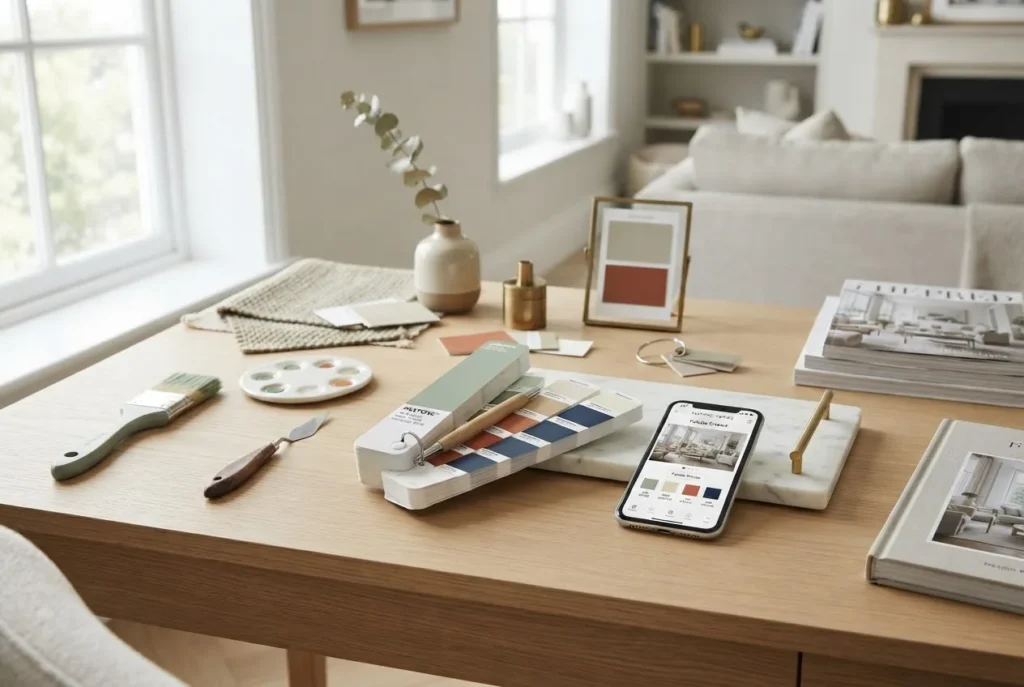
Earth tones and warmth. Incorporate earth tones (terracotta, warm ochre, muted greens) as accents against a neutral base to add depth. Example palette: warm gray walls, olive-green throw, terracotta pottery.
Bold accents and geometric patterns. Use one bold color per room—cobalt blue or mustard—and apply it in small doses (one armchair, one rug, and art). Geometric patterns work well on cushions and rugs; limit pattern scale so it doesn’t compete with architecture.
Color blocking and architectural accents. For a contemporary twist, paint a single wall or vertical recess in an accent color (approx. 20–30% of visual wall area). Keep adjoining walls neutral to retain flow.
Practical example: For a living/dining open-plan space, choose warm white walls (60%), a gray sectional (30%), and introduce a terracotta accent chair plus a geometric rug in muted blue (10%). This approach keeps the look cohesive across connected spaces.
Transition: Color, patterns and textures are only useful when furniture is chosen and laid out to support the styling — the next section gives step-by-step layout and furniture selection advice.
Furniture Selection and Layout Tips for Contemporary Interiors
This section is presented as step-by-step actions you can follow to plan furniture and circulation. Definitions: modular furniture — pieces designed to be combined and reconfigured; ambient lighting — general lighting providing overall illumination.
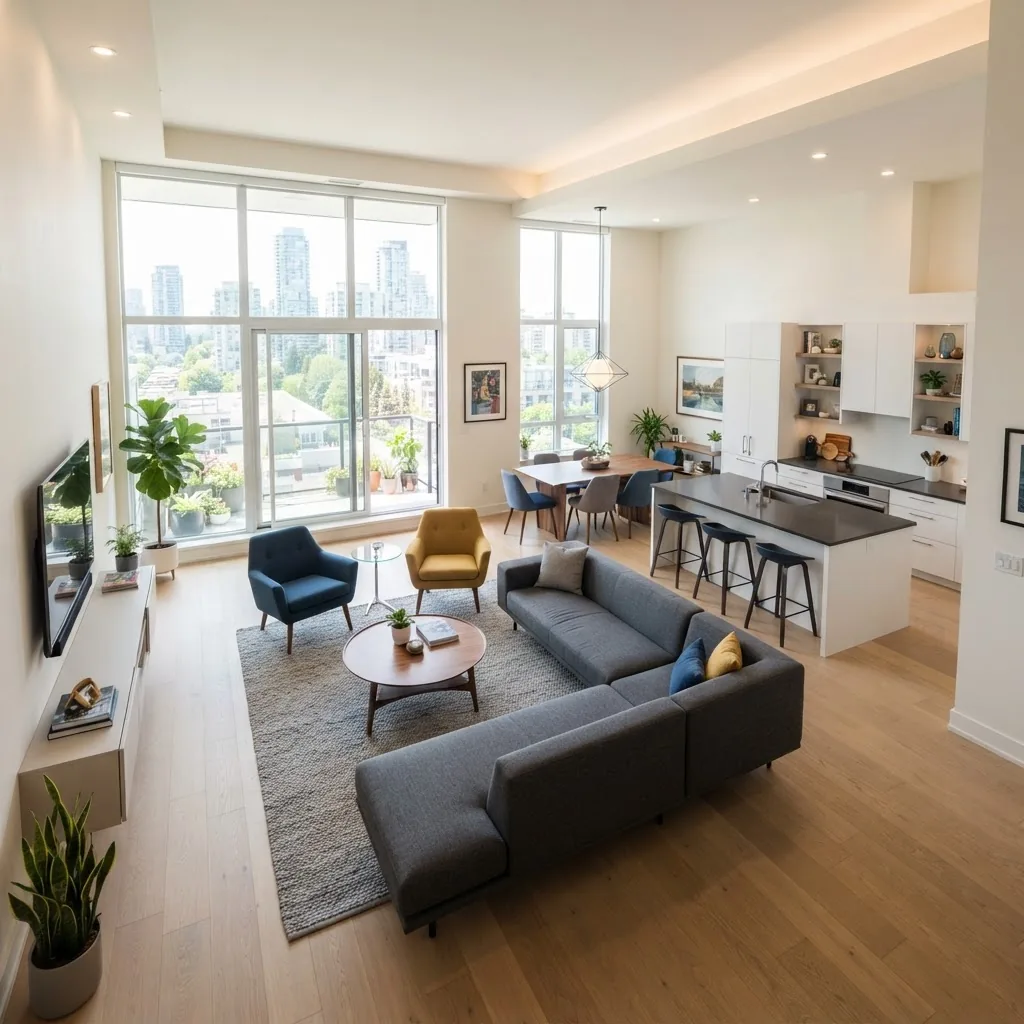
- Measure and map the room first. Take a photo and measure length, width, ceiling height, window and door positions. Create a to-scale sketch (1:50 scale or use a digital planner). Note electrical outlets and switches.
- Decide primary functions. Identify how the room will be used (lounge, dining, work). Prioritise the largest function when placing anchor pieces (sofa, table).
- Choose an anchor sofa and set dimensions. For communal living rooms, a sofa 200–250 cm long seats three comfortably. Keep seat height 420–460 mm; coffee table height should match seat height ±20 mm.
- Arrange for comfortable circulation. Leave 600–900 mm between coffee table and sofa for legroom and 800–1,000 mm between furniture groups for main pathways. In open-plan living, allow 1,200–1,500 mm near kitchen islands for traffic flow.
- Use modular pieces for flexibility. Opt for a modular sofa with 70–90 cm deep modules for easy reconfiguration. Modular furniture works well in changing family needs and small spaces.
- Balance scale and symmetry. Pair a low-profile sofa with taller side lighting to create visual balance. Use matching side tables or a pair of accent chairs symmetrically for formal zones; asymmetry suits casual seating areas.
- Anchor with rugs and sightlines. Ensure at least the front legs of major seating sit on the rug. Create an uninterrupted sightline from entry to a focal feature like a fireplace or large artwork.
- Store smartly with concealed storage. Add media cabinets and bench seating with hidden compartments to keep surfaces uncluttered while retaining functionality.
- Test layout with painter’s tape and cushions. Mark furniture footprints on the floor with tape and place cushions to simulate scale before moving heavy furniture; change as needed.
- For small or narrow homes. Use space-saving multipurpose pieces: extendable dining tables, wall-mounted desks, sofas with built-in storage. For planning guidance on narrow or specific widths, consult 14m Wide House Designs and Planning, and for slightly larger widths see 15m Home Designs Guide and Layout Tips.
- Smaller bedroom planning. For compact homes and efficient room layouts consult 2 Bedroom House Design and Floor Plans and 3 Bedroom Modern House Plans and Layout.
Tip: Always place the largest items first and work down to accents. If you’re building new or significantly altering room sizes, review floor design guidance here: Floor Designs for House.
Transition: Correct lighting transforms the furniture arrangement — the next section outlines lighting strategies and lumen guidelines.
Lighting Strategies in Contemporary Home Design
Good lighting uses a layered approach: ambient (overall), task (reading, cooking) and accent (art, features). Below are actionable settings and product choices.
Ambient lighting targets: Living rooms 200–300 lux, kitchens 300–500 lux on work surfaces, bathrooms 300–400 lux for grooming. For ambient light use dimmable LED panels or recessed downlights with CRI (Colour Rendering Index) ≥90 for accurate color.
Task lighting: Provide 300–1,000 lux at task zones (reading chairs, kitchen benches). Use adjustable LED desk lamps or under-cabinet strips (colour temperature 2700–3500K for warm to neutral light).
Accent lighting: Use directional spots (12–30° beam) to highlight art or architectural elements. Keep accent luminance 1.5–3x ambient levels to create depth.
Fixture selection: Choose pendant lights with integrated LED for clean lines and low heat output. For dimmer compatibility, choose LED drivers labelled TRIAC or DALI compatible where dimming is required.
For multi-storey homes with vertical circulation and daylight shafts see 3 Storey Home Lighting Design Tips. Also consult Australian lighting standards for safety and energy efficiency: Australian Building Codes Board (lighting standards and materials, official guidance).
Transition: With lighting and layout set, the next section explains how to integrate smart features cleanly into contemporary interiors.
Integrating Technology and Smart Elements Discreetly
Smart elements should be invisible until needed. Follow these practical tactics to avoid tech-dominated aesthetics.
Choose wireless smart lighting and hubs compatible with major ecosystems (Zigbee, Z-Wave or Wi‑Fi). Conceal wiring in skirting channels or behind joinery; where concealment isn’t possible, use cable raceways painted to match the wall.
For built-in speakers and AV, use flush-mounted or in-ceiling speakers and an AV cabinet with ventilation and filtered air supply. For home automation integration tips and product selection, aim for modular systems that allow phased upgrades — this keeps initial costs lower and supports future-proofing.
When hiding displays, consider motorised TV lifts or wall panels that match cabinetry. Specify recessed mounting depths (usually 40–60 mm) and ventilation gaps of 25–50 mm behind displays to prevent heat build-up.
Quality assurance: choose devices with at least two years’ manufacturer support and check firmware update policies. For environmental and installation standards on tech wiring consult industry guidance and confirm compliance with local regulations (source: building authority documentation).
Transition: Sustainability choices affect material selection and long-term cost; the following section provides eco-focused options and trade-offs.
Sustainable and Eco-Friendly Contemporary Decor Choices
Sustainable decor reduces environmental impact and often improves indoor comfort. The choices below balance aesthetics, cost and longevity.
Use certified sustainable materials. Look for FSC-certified timber, recycled metal, and textiles with Global Organic Textile Standard (GOTS) or recycled fibre content. For large home cost and sustainability planning reference 20m Home Designs and Cost Factors. Also review certification frameworks via Green Building Council of Australia for green credentials.
Energy-efficient lighting and HVAC. Specify LED fixtures with efficacies >100 lm/W and ENERGY STAR-rated appliances where available. Install programmable thermostats and zoned heating for 10–30% energy savings in many homes (According to a 2023 energy-efficiency industry report).
Durability over disposable decor. Invest in higher-quality anchor pieces (sofa, dining table) with repairable frames and replaceable upholstery to reduce lifetime cost and waste. Consider refurbished furniture for unique character and lower embodied carbon.
Low-VOC finishes. Choose paints and adhesives labelled low-VOC or zero-VOC to reduce indoor emissions; many Australian suppliers list VOC levels on product data sheets.
Trade-offs: recycled materials may have limited colour or surface options; balance with neutral design choices so finishes read intentional. For detailed cost-sustainability trade-offs on larger projects consult industry cost models and local building guides.
Transition: With sustainable choices selected, apply the following styling steps to combine function with aesthetics.
Styling Tips: Combining Functionality with Aesthetics
Follow these numbered, practical steps to style a room so function and aesthetics coexist.
- Edit before you add. Remove 50–70% of small accessories from surfaces; keep one curated vignette per zone.
- Create three visual layers. For each seating area include a base layer (sofa/rug), a middle layer (lighting/side table), and a top layer (art/plant). This creates depth and functionality.
- Define focal points. Every room needs one focal point — a fireplace, a large artwork, or a view. Arrange seating to face or complement that point; rotate accent cushions to reflect the focal color.
- Use multi-purpose furniture. Select benches that double as storage (volume at least 100 litres for toy or linen storage) or coffee tables with reversible tops for dining flexibility.
- Manage clutter with zones. Allocate a “drop zone” near the entry for keys and mail using a single tray and concealed bin. Keep this zone under 1 m wide for small entries.
- Scale decor to ceiling height. For ceilings under 2.6 m, use low-profile furniture and horizontal art; for ceilings 3 m and above, introduce taller storage and vertical art to maintain proportion.
- Rotate accents seasonally. Swap throws and cushions twice a year to refresh color and texture without large purchases.
- Test lighting scenes. Create at least three scenes: daytime (bright ambient + natural), evening relaxed (ambient dimmed to 40% + accent), and task (focused lighting at 100% for cooking or reading). Use timers or scenes in your smart system for consistency.
- Document decisions. Photograph each completed room and note paint codes, fabric names and fixture models in a simple spreadsheet for future purchases or repairs.
Transition: To maintain the look and protect your investment, follow the maintenance advice below.
Maintaining Contemporary Decor: Cleaning and Upkeep Advice
Use these step-by-step care instructions to keep surfaces and textiles looking new.
- Establish weekly routines. Dust with a microfiber cloth weekly, vacuum rugs and upholstery fortnightly using brush-off settings.
- Address spills quickly. Blot liquids immediately with a clean cloth; for fabric, use the manufacturer’s recommended cleaner. For wool rugs, blot with cool water and mild detergent; avoid vigorous rubbing.
- Deep clean annually. Schedule professional upholstery cleaning every 12–24 months depending on use; deep-clean rugs every 2–3 years.
- Maintain finishes. Re-oil timber surfaces every 2–4 years and reseal grout lines in wet areas every 2–3 years to prevent staining.
- Check tech and lighting. Verify smart device firmware yearly and replace LEDs after recommended lifetimes (often 25,000–50,000 hours). Keep spare bulbs and drivers stored with fixture documentation.
Transition: Before you act on your plan, learn from common mistakes observed in real projects.
Common mistakes and how to avoid them
I once placed a large rug that was too small for the seating group — it made the room feel disjointed. Avoid this by measuring and using painter’s tape to mock up rug size first. I also saw homeowners buy accents in the wrong scale; always test scale with cushions or taped footprints.
I observed clients choose high-gloss finishes for heavy-use areas; scratches showed quickly. Instead, balance glossy accents with robust, low-maintenance materials. I also noticed insufficient lighting layering in a new build — add accent and task lights early in the planning process, not as an afterthought.
Final checklist before you call a contractor or buy
- Measurements recorded: room dimensions, window heights, outlet positions — yes / no
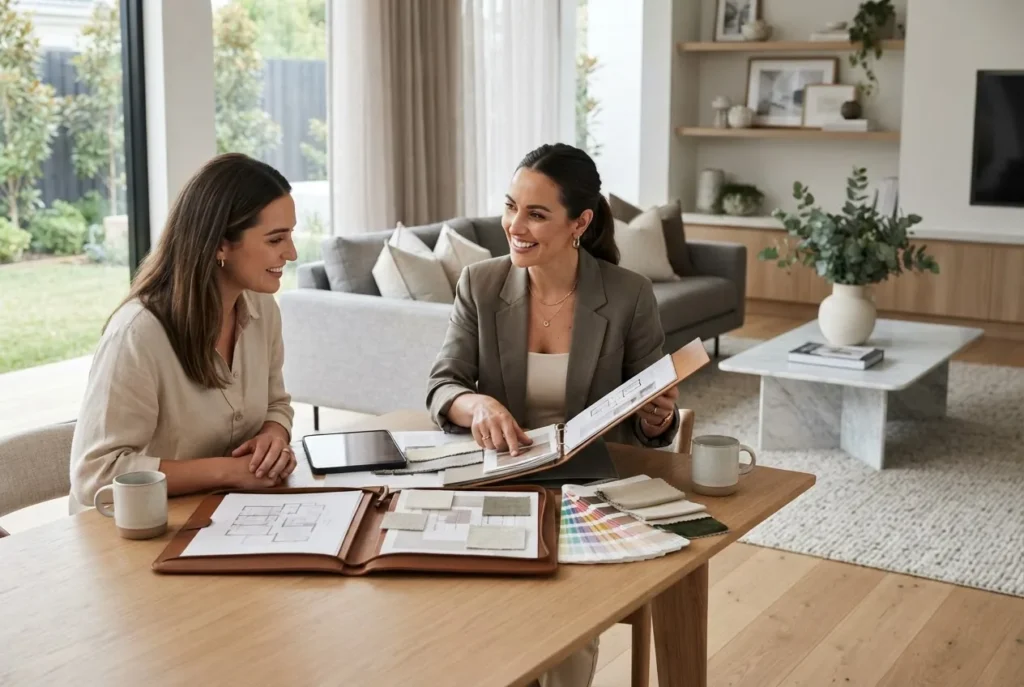
- Primary color palette selected and sample-approved under room light — yes / no
- Anchor furniture chosen and mock-up taped on floor — yes / no
- Lighting scenes defined and dimmer compatibility confirmed — yes / no
- Materials specified with care instructions and warranties — yes / no
- Sustainable or certified material choices noted where required — yes / no
When to call a professional
Hire a licensed electrician for wiring, a licensed builder or carpenter for structural joinery or built-ins, and a certified colour consultant for large-scale palette decisions if you feel uncertain. Consider an interior stylist for one-day staging of final accents — they can usually complete a room refresh in 6–8 hours.
Transition: A strong finish pulls together design, materials and maintenance — the concluding section summarises practical takeaways and actions.
Conclusion and Final Thoughts on Contemporary Home Decor
By following this guide you’ll achieve a cohesive contemporary interior that balances form and function, uses accents to create focus, and applies sustainable choices where they matter most. Start with measurements, select durable anchor pieces, layer lighting, and use texture to warm neutral palettes. When ready, implement one room at a time and document materials for longevity. Ready to begin? Sketch your room today and test one rug and one lighting scene this weekend to see immediate change.