By the end of this guide you will have a clear, step-by-step roadmap to choose and complete an interior stylist training path, build a market-ready portfolio, and understand certification outcomes; realistic timeline: 3–18 months depending on course intensity; assumed level: beginner to early-career decorator.
This hands-on guide assumes you know basic home-decor preferences but have little formal training—read on for concrete actions, timings, and measurable milestones.
Before you start
- Prerequisites: basic photography (smartphone or DSLR), computer with internet, digital mood-board tool (Canva or Pinterest), notebook for client briefs.
- Essential tools: tape measure (3–5 m), colour swatches, fabric sample pack, sample furniture dimensions list.
- Time & budget planning: block 4–8 hours/week for short courses, 10–20 hours/week for diploma-style programs; budget range A$500–A$12,000 depending on program level and delivery format.
- Outcome checklist: at least 8 portfolio images (minimum 4 before/after), one staged residential shoot, at least one paid or pro-bono client brief completed.
Now follow the practical steps below; each H2 section includes clear numbered actions you can complete and the expected time per step.
What Is an Interior Stylist? Understanding the Role and Scope
Transition: First, define the profession you’re training for so you select the right courses and market yourself correctly.
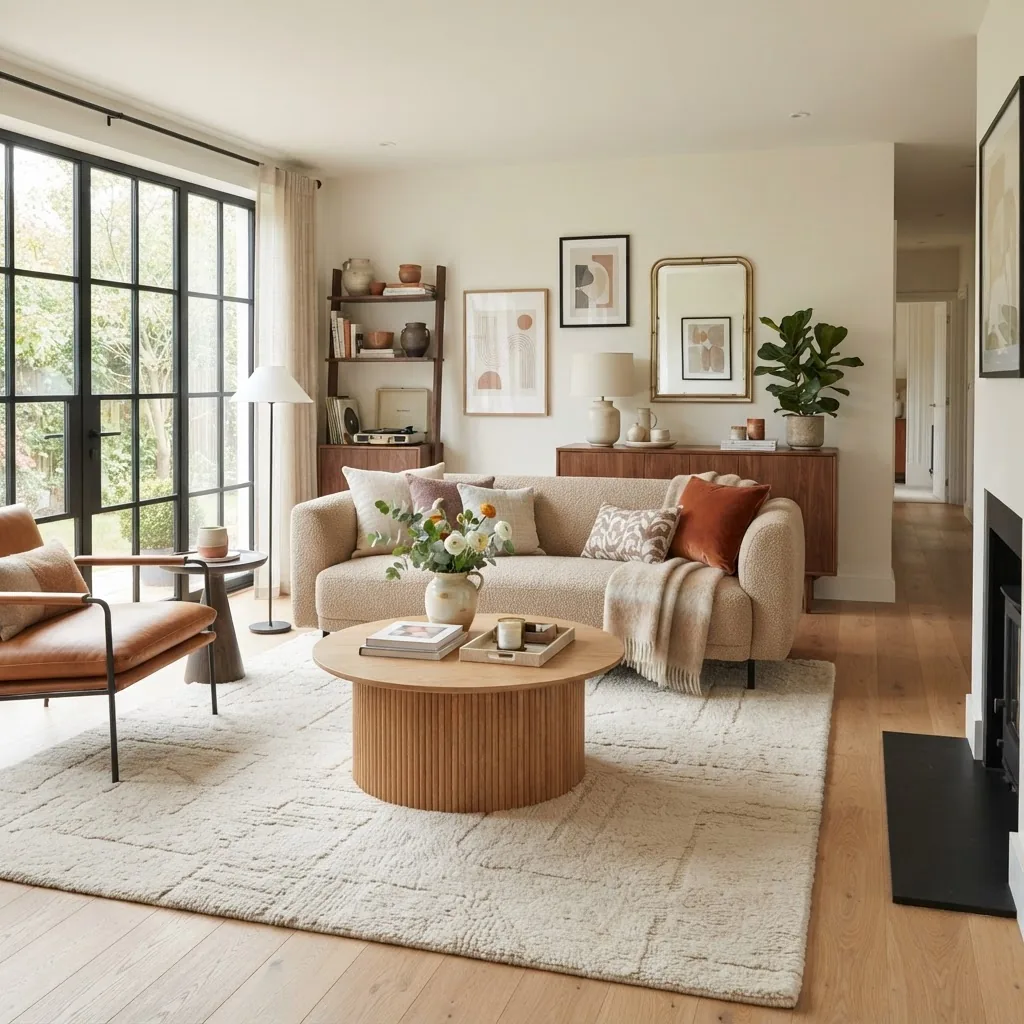
- Clarify the role: An interior stylist focuses on the visual presentation of interiors — furniture arrangement, textiles, props, lighting, finishes and photographic presentation — to create a desired aesthetic. Unlike an interior design stylist, stylists rarely produce construction drawings or specify structural changes; instead they shape mood, merchandising and photographed outcomes.
- List typical responsibilities: client consultations, mood boards, sourcing furniture and props, on-site styling, set dressing for shoots or real estate staging, and preparing shopping or hire lists. Example: for a 3-bedroom staged home expect 6–12 hours of prep + 3–5 hours on-site styling.
- Understand scope by industry example: Residential styling — create livable vignettes for buyers; commercial styling — curate lobby, retail or hospitality experiences; editorial/product styling — compose for photography and catalogues. Each requires different delivery timelines: staging jobs typically 1–2 days turnarounds; editorial shoots may require longer concept development (1–3 weeks).
- Practical exercise (2–4 hours): Take a single living room you can photograph. Produce a simple brief—audience, mood (3 words), budget A$500—then create a 6-item shopping/hire plan and a before-photo and a staged after-photo. This shows the immediate impact of styling choices.
- Learnable outcomes: By completing these tasks you’ll be able to explain to clients what a stylist does, price simple jobs, and estimate on-site time accurately (e.g., small apartment styling: 3–6 hours on-site).
For applied tips on arranging furniture and staging rooms, see the interior styling tips guide for effective home decoration.
Why Pursue Interior Stylist Training and Certification?
Transition: Once you know the role, decide whether structured training or certification will improve your client acquisition, pricing and skills.
- Improve credibility and pricing: Formal credentials demonstrate competency to clients and agencies, enabling higher day rates (expected uplift: 10–40% depending on market). According to a 2023 industry report, certified creatives report higher client trust scores and faster client conversion (source type: industry survey).
- Learn repeatable workflows: Training teaches practical processes—briefing, budgeting, sourcing, prop schedules, shoot staging—so you can deliver reliably under time constraints (target: deliver a staged 3-bedroom job within 8–12 hours total work time).
- Access to networks and suppliers: Accredited programs often include supplier lists and trade discounts; apprenticeships/internships connect you with photographers, hire houses and real-estate agents.
- Competitive edge: Certification signals professionalism for platforms, agencies, and high-value clients; for example, many staging companies shortlist certified stylists first when hiring.
- Structured skill progression: Certificate-level courses (3–6 months) focus on practical styling and portfolio work; diploma-level (9–18 months) add business, trend forecasting and project management modules.
Benefits summary:
- Faster client onboarding and clearer pricing models.
- Repeatable project templates for staging and editorial work.
- Access to accredited networks and potential supplier discounts.
- Higher perceived value when pitching to agencies or clients.
Interior Stylist Training Pathways and Course Formats
Transition: Choose the delivery format that matches your schedule, budget and career goals—below are practical options and trade-offs.

- Short online courses (4–12 weeks): Best for quick skill acquisition—focus on mood boards, colour basics, prop sourcing and photography for social media. Time commitment: 3–8 hours/week. Cost: A$200–A$1,200. Use for immediate portfolio refreshes.
- Certificate programs (3–6 months): Blended or online; include project-based assessments, mentor feedback and portfolio reviews. Time: 6–12 hours/week. Cost: A$1,000–A$5,000. Outcome: accredited certificate, practical portfolio, supplier lists.
- Diploma or advanced diplomas (9–18 months): In-depth study with business modules, client management, project workflows and industry placements. Time: 10–20 hours/week. Cost: A$4,000–A$12,000. Outcome: industry-recognised diploma, stronger placement prospects.
- In-person workshops and masterclasses (1–5 days): Intensive skills like styling for photography, textile workshops, or prop-sourcing. Cost: A$150–A$800. Useful as continuing education or to gain a rapid portfolio boost.
- Apprenticeships/internships (variable): Paid/unpaid placements with staging companies, retailers, or creative agencies. Duration: 1–6 months. Value: real projects, client interaction, and network introductions.
- University or allied design diplomas (1–2 years): Broader study including interiors and sometimes architecture; useful if you want a hybrid interior design + styling pathway but more theory-heavy and costlier (A$10,000+).
For a broader view of related design education paths, consider architecture and style courses for design professionals.
Key Skills and Knowledge Areas Covered in Interior Stylist Courses
Transition: Training should focus on practical competencies you can demonstrate in a portfolio and client pitch—below are measurable skill outcomes and sample exercises.
- Space planning and scale: Readable layouts, circulation paths and furniture proportioning. Exercise: produce 2 scaled furniture plans for a 4m x 5m living room (use a 1:50 scale; measure furniture footprints in mm). Target: two alternate layouts within 2 hours.
- Colour basics and applied palettes: Practical palettes, contrast ratios, and tonal layering for interiors. Exercise: create three 5-colour schemes for morning, neutral and evening moods. For deeper study see the background colours guide for effective interior design styling, best colour combos guide for interior decorating and styling, and colour match techniques and online tools for design accuracy.
- Textiles and materials selection: Fabric weights, drape, durability (Martindale rub test basics), and appropriate textiles for function: upholstery (20,000–50,000 rubs recommended for heavy traffic), curtains (light-filtering vs blackout), and rugs (pile height recommendations).
- Furniture styling and prop selection: Creating layered vignettes, focal points and balance; exercise: curate a six-item prop list for a kitchen shoot under A$350.
- Trend awareness and forecasting: Identify seasonal cycles (6–12 month product lead times); track three trade sources weekly and produce a one-page trend brief each month.
- Photography and presentation for portfolios: Learn basic composition, natural lighting windows (shoot within two hours of golden hour when possible), and post-production basics (crop, exposure, colour balance). Aim for consistent 3000px-long edge JPG exports for portfolio display.
- Client communication and briefs: Convert client goals into a 1-page brief with scope, budget (A$), timeline, and deliverables; practice estimating with three different budgets (A$500, A$2,500, A$8,000).
- Styling logistics and project management: Learn prop inventories, pick-up/drop-off schedules, and hire-house relationships; sample deliverable: a one-page logistics run-sheet for a 6-hour staging job.
- Tools and software: Common tools are SketchUp for simple 3D blocking, Adobe Lightroom for photo edits, Canva/Pinterest for mood boards, and Excel/Google Sheets for inventories and quotes.
Further reading on palette, shade, and digital tools: colour shade guide and training for harmonious interior design, cool colours guide for home decor and interior style training, house colour schemes guide for interior decorating and styling, and picture of color palette tools and guide for design matching. For paint selection basics see the paint colours guide and chart for home painting and styling.
Certification Bodies and Industry-Recognized Credentials for Interior Stylists
Transition: Verify accreditation and recognition before you enrol; the right credential impacts employability and supplier access.
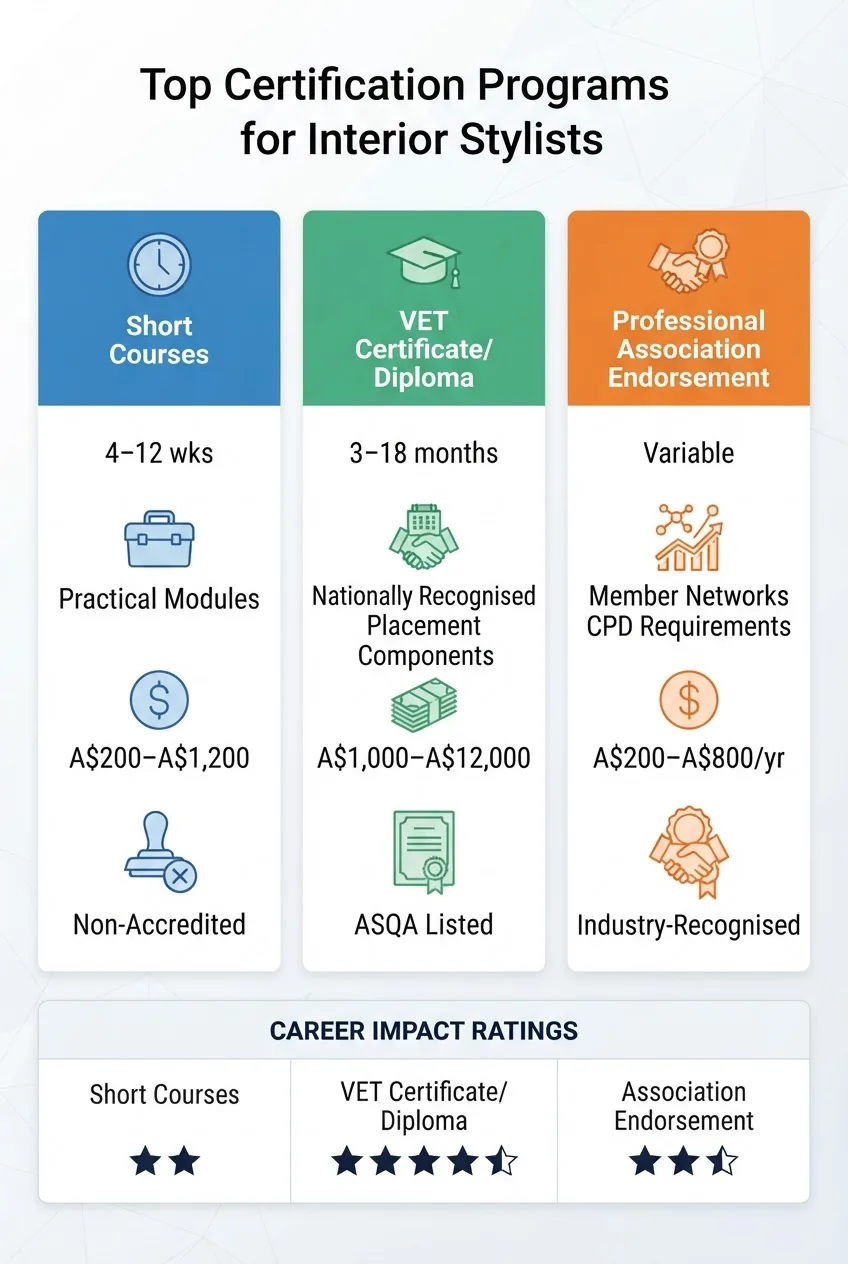
Below is a concise comparison of three common credential routes: industry short courses (non-accredited), vocational certificates/diplomas (VET), and professional association endorsements. Always check national regulator listings for course approval.
| Credential Type | Duration | Key features | Cost range (A$) | Recognition |
|---|---|---|---|---|
| Short courses | 4–12 weeks | Hands-on modules, portfolio tasks | 200–1,200 | Non-accredited / industry-valued |
| VET Certificate / Diploma | 3–18 months | Nationally recognised, placement | 1,000–12,000 | ASQA / state regulators |
| Professional association endorsement | Variable (CPD yearly) | Networking, CPD, standards | 200–800/yr | Industry-respected |
Key certifying and regulatory organisations to verify program legitimacy include the national vocational regulator and professional bodies. Check course listings against the national register: Australian Skills Quality Authority (ASQA) and consider professional membership options such as the Design Institute of Australia for broader recognition: Design Institute of Australia. For career outlook data consult national labour statistics: Australian Bureau of Statistics.
Compare trade-offs carefully: accredited diplomas cost more and take longer but are more likely to be listed on job descriptions for staging and agency roles; short courses are cheaper and quicker but may lack formal recognition. For comparison with residential-focused certification see the residential interior design course and certification overview.
Building Your Interior Styling Portfolio and Gaining Practical Experience
Transition: Your portfolio is primary evidence of skill—training is useful only if you convert learning into strong visual work.
- Start with 8 focused images: Minimum portfolio: 8 images across 4 project types (living room, bedroom, kitchen, retail/vignette). Include at least 4 before-and-after pairs. Target upload size: JPGs at 2048–3000px long edge, 72–150 dpi for web.
- Document process as case studies: For each project write a one‑page case study: brief, budget, key decisions, time on-site, supplies hired/purchased (include A$ amounts). This shows practical problem solving to potential clients.
- Gain real projects via pro‑bono or trade swaps: Offer a free 3-hour styling session to a real-estate agent in exchange for permission to photograph and list as portfolio work. Expect to trade about A$150–A$350 of props/hire to secure access.
- Use mock assignments if needed: Create three mock editorial spreads using rental props and one paid photographer (or student photographer) to simulate professional deliverables. Budget goal: keep photography under A$400 per shoot.
- Build a digital mood‑board library: Save 30 mood boards across styles (Scandi, Japandi, Coastal, Contemporary). Use mood boards in client pitches to show stylistic range. Helpful resource: home decor mood board guide and tools for creative styling.
- Practice DIY projects: Redo a shelf vignette, restyle a bedside table, or paint a feature wall. Use the room design DIY guide and tutorials for home improvement to structure these practice jobs.
Example anonymized case study: “Talia, course graduate, completed a 12-week certificate, then staged and photographed a 2‑bedroom apartment for an agent; she converted the shoot into 6 portfolio images and secured two paid staging jobs within 8 weeks.” This demonstrates measurable post-training outcomes (time to first paid job: 8 weeks).
Career Opportunities and Growth in Interior Styling
Transition: With training and portfolio ready, explore where stylists work and how to position yourself for growth.
- Common roles: residential stylist, property stager, retail visual merchandiser, editorial/product stylist, freelance stylist, in-house stylist for furniture or lifestyle brands. Each role has differing headline day rates: home-staging A$350–A$800/day, freelance shoot styling A$300–A$900/day, in-house salaried roles A$50k–A$85k/yr depending on experience.
- Industries served: real estate, hospitality, retail, e‑commerce, editorial media, and event production. Tailor your portfolio to the industry—staging images for agents and high-contrast editorial shots for magazines.
- Freelance vs agency vs in-house: Freelancers control rates and client mix but must manage admin; agencies provide steady workflows and bigger clients; in-house roles offer predictable income and benefits. Map your chosen path and plan for business basics: GST registration threshold A$75,000 (Australia).
- Market demand and trends: Demand for short-term styling for property and e-commerce has grown. According to a 2024 industry report, visual merchandising and online listing presentation increased by double digits in urban markets (source type: market research report).
- Career path examples: Junior stylist (0–2 years) → Senior stylist (3–6 years) → Art director / creative lead or start your own styling agency; recommended milestones: 2 paid clients/month to be viable as a part-time freelancer, 6–10 clients/month for full-time.
Stat block: Typical freelancer earnings (Australia) — Entry: A$25–45/hr; Mid: A$45–80/hr; Senior: A$80–150+/hr. Source: According to a 2024 industry salary survey (source type: industry survey).
Costs, Timeframes, and Choosing the Right Training Program for You
Transition: Use this practical checklist to evaluate program ROI and fit before enrolling.
- Estimate total cost vs expected outcomes: Add tuition, travel, photography and prop costs. Example budget for a certificate path: tuition A$3,500 + photography A$600 + props A$400 = A$4,500 total. Anticipated first-year revenue target post-training: A$8,000–15,000 if you secure 6–10 small jobs.
- Compare timeframes: Short courses (1–3 months), certificates (3–6 months), diplomas (9–18 months). Decide if you need immediate skill gain (choose short courses) or long-term career positioning (choose diplomas).
- Check prerequisites and support: Some diplomas require portfolios or workplace placements; ask providers about mentor access, industry links, and placement assistance.
- Flexible study options: Part-time online study typically allows 6–12 hours/week; accelerated intakes may require 15–20 hours/week. Confirm assessment methods: project-based assignments vs exams.
-
Decision checklist:
- Is the course nationally recognised (VET) or industry-recognised?
- Does the curriculum include portfolio review and photography?
- Are there opportunities for placements or supplier introductions?
- Does the timeline match your income and availability needs?
Continuing Education and Staying Ahead in Interior Styling
Transition: After qualifying, commit to ongoing learning to retain a competitive edge and keep your portfolio current.
- Schedule quarterly masterclasses: Focus areas: photography lighting, textile sourcing, prop-cycling, or commercial styling. Time: 1 day each quarter. Cost target: A$150–A$600 per class.
- Track trends monthly: Maintain a one‑page “trend tracker” with 6 emerging products or palette shifts you observed; update your client pitch with relevant examples every 6 months.
- Join professional communities: Associations and online cohorts offer CPD, job leads, and supplier deals. For ongoing skill-building consider the Interior Design Styles Course for New Home Styling Professionals to broaden stylistic foundations and client offering.
- Use refresher short courses for new tools: When new digital tools appear (AR, 3D staging), allocate 4–8 hours to learn basics and add one fast project to showcase the tool.
Recommended continuing resources: attend 1 industry trade fair per year, read 2 industry reports annually, and budget A$500/year for CPD and materials. These small investments sustain market relevance.
Common mistakes and how to avoid them
I once accepted a staging brief without measuring the key rooms and had to rent incorrect furniture—save this by always taking and confirming three room dimensions and door clearances before booking hire items. I also underpriced my photography package; now I always include fixed photography fees or require the client to supply images.
Another frequent error I saw: relying solely on non-accredited short courses and then being rejected for agency roles that require a VET diploma. Fix: combine a practical short course with a recognised certificate or documented work placements.
Compact checklist to verify your readiness
- At least 8 portfolio images including 4 before/after pairs.
- One complete case study with budget, sourcing list and timeline.
- Basic business setup: ABN/GST awareness (if in Australia), invoicing template, standard contract template.
- Supplier contacts: at least two hire houses and two local retailers for discounts.
- Continuing education plan: 4 CPD activities scheduled over 12 months.
When to call in a professional
If a project requires structural changes, detailed building code knowledge, or certified engineering inputs, engage a licensed interior designer or architect. For complex commercial briefs (e.g., hospitality built environment, occupant safety certification), call a professional project manager or registered designer. Use certified specialists when compliance, permits, or contractor coordination is required.
Disclaimer: Course costs, duration and outcomes vary by provider and jurisdiction; verify accreditation and review the provider’s placement and graduate outcome statistics before enrolling.
Conclusion: Follow the steps above—select a program that matches your timeline, build a compact portfolio with measurable case studies, and plan ongoing CPD. Start with a short applied course if you need immediate portfolio results, then stack a certificate or diploma for long-term career growth. Ready to level up? Begin with one concrete task this week: photograph and case-study a space you styled, then target one pro-bono trade swap with an agent within 30 days.